
Articles
Thailand Travel Budget: What 2 or 4 Weeks Could Cost
Three worked budgets for Thailand, with clear assumptions and practical ways to balance Bangkok, the north and the coast.
Thailand can support very different trips: a dorm bed and long stays in Chiang Mai, a private room with a few planned excursions, or beach hotels and frequent transfers. A single daily price hides those choices.
Our worked examples start at THB 21,150 per person for 14 days and THB 40,750 for 28 days, before international flights and the exclusions below. These are editable planning scenarios, not surveyed market averages, live quotations or promises that a particular room is available.
What the numbers include
Every total includes accommodation, meals, ordinary local transport, an activity allowance, small incidentals, domestic journeys and a separate reserve. Count 14 days with 13 nights, or 28 days with 27 nights, from arrival in Thailand to departure. Extra flight days outside the country are additional.
International flights, travel insurance, entry-document costs where applicable, vaccinations or medical expenses, shopping, substantial nightlife spending and specialist courses such as scuba certification are excluded. Add those from your own requirements and quotes. Domestic transport is included as a planning allowance, with baggage and airport or pier transfers charged to that same block.
We use Thai baht throughout. Convert the final total using a dated rate from your payment provider; its fees may differ from a displayed market rate. Our five-step trip budget method explains how to keep prepaid bookings separate from money still available on the road.
Choose a travel style before a daily allowance
Simple backpacking: a dorm bed, local meals, mostly shared or public transport and selected paid visits. The low transfer allowance favors Bangkok plus the north or one coastal region. It is not designed for flights and island changes every few days.
Private room, selective activities: two adults sharing a room, a mix of inexpensive meals and restaurants, occasional taxis and a few excursions. This is the most useful starting scenario for couples who want to compare a city, northern and coastal combination.
More room and flexibility: two sharing a higher room allowance, more restaurant meals, more convenient transport and additional paid experiences. Resort upgrades and private boat charters still need separate quotes.
The following amounts are editorial inputs per person in THB, averaged over the trip. They are not individual menu prices or hotel offers.
| Planning input | Backpacking | Private room | More flexibility |
|---|---|---|---|
| Accommodation per night | 450, dorm bed | 900, half of a 1,800 room | 1,800, half of a 3,600 room |
| Food and non-alcoholic drinks per day | 300 | 500 | 800 |
| Ordinary local transport per day | 100 | 200 | 350 |
| Activities per day, averaged | 250 | 400 | 700 |
| SIM, laundry and small incidentals per day, averaged | 50 | 100 | 150 |
| Daily spending, excluding accommodation | 700 | 1,200 | 2,000 |
| Domestic journeys, 14 / 28 days | 2,500 / 4,000 | 4,500 / 6,500 | 7,000 / 10,000 |
| Separate reserve, 14 / 28 days | 3,000 / 5,000 | 5,000 / 9,500 | 9,000 / 17,000 |
The activity allowance is a pot, not a daily limit. For a verified reference point, the Grand Palace's official ticket page lists THB 500 for foreign visitors, checked September 8, 2026. In the backpacking example, that one admission uses two days of the activity allowance. The remainder needs a mix of paid visits and inexpensive days.
Worked totals for two and four weeks
Use nights × accommodation + days × daily spending + domestic journeys + reserve. The resulting amounts retain their exact arithmetic so you can change one line without rebuilding the calculation.
| Per person, THB | 14 days / 13 nights | 28 days / 27 nights |
|---|---|---|
| Simple backpacking | 21,150 | 40,750 |
| Private room, selective activities | 38,000 | 73,900 |
| More room and flexibility | 67,400 | 131,600 |
For the middle 14-day scenario: 13 × 900 + 14 × 1,200 + 4,500 + 5,000 = THB 38,000. For two adults, the equivalent allowance is THB 76,000, plus each person's excluded costs. The actual room budget is THB 23,400 for both people together.
Traveling solo in that same private room adds THB 11,700 over 13 nights, before reassessing the reserve. Room sharing does not halve food, admissions or flight tickets. For unequal stays, our guide to splitting travel expenses separates who pays from who shares a cost.
Bangkok, Chiang Mai or the coast: where to spend the days
Bangkok: choose accommodation around the journeys you will actually make. A station nearby helps with cross-city days; a room near the old town suits a temple-focused stay. Compare the complete room-and-transport cost. A cheap room that creates repeated taxis can defeat its own saving.
Chiang Mai: use one base for several nights if markets, temples and time to explore on foot are priorities. Allocate countryside excursions separately; a low city spending day does not price a guided mountain trip. For the Bangkok journey, compare your actual train option through SRT D-Ticket. Remove a hotel night only if a booked sleeper really replaces it.
Krabi and the islands: decide whether you want a mainland base with day trips or the experience of sleeping on an island. Each move needs a complete chain: hotel to pier, boat, arrival transfer and possibly a second flight. Compare that chain before adding another island. Staying put can protect both beach time and the transport allowance.
A manageable 14-day example
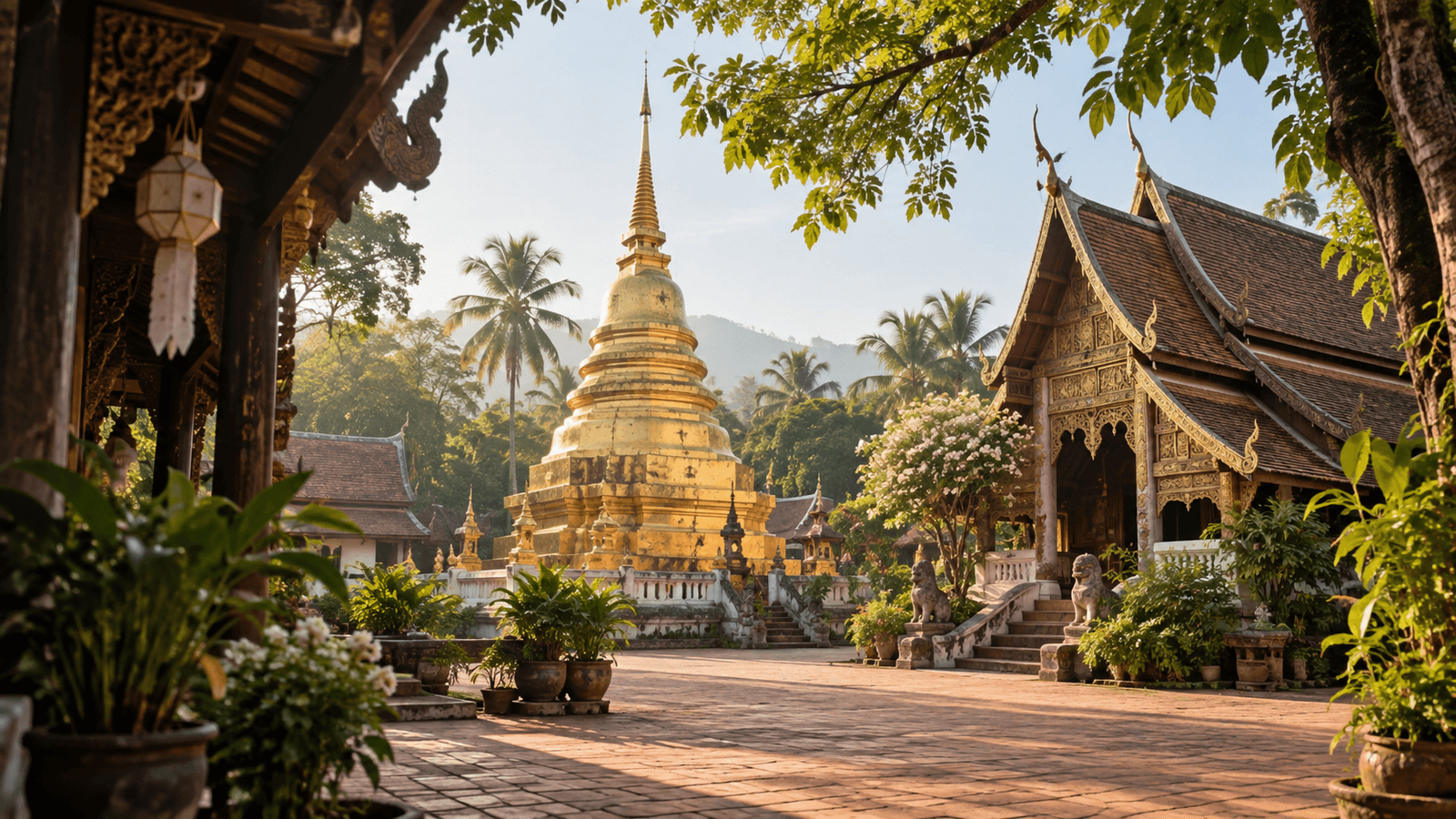
Allocate 4 nights Bangkok, 4 Chiang Mai, 4 around Krabi and 1 back in Bangkok: 13 nights in total. This is a route framework, not a timetable. Price all three domestic legs before booking; the sample allowance may be insufficient on your dates. For a tighter budget, drop one region and extend the others.
A slower 28-day example
Try 4 nights Bangkok, 8 Chiang Mai, 7 around Krabi, 7 Koh Lanta and 1 Bangkok. That is 27 nights. The extra two weeks buy longer stays rather than twice as many destinations. Check the exact transfer to Koh Lanta for your dates and accommodation location. Keep the final mainland connection clear of the international flight.
Season can change both price and route
Compare accommodation for your precise holiday dates, especially Christmas, New Year and local festivals; a generic annual room allowance cannot establish availability. If the quoted per-person nightly cost rises by THB 300, the increase is THB 3,900 over 13 nights or THB 8,100 over 27 nights.
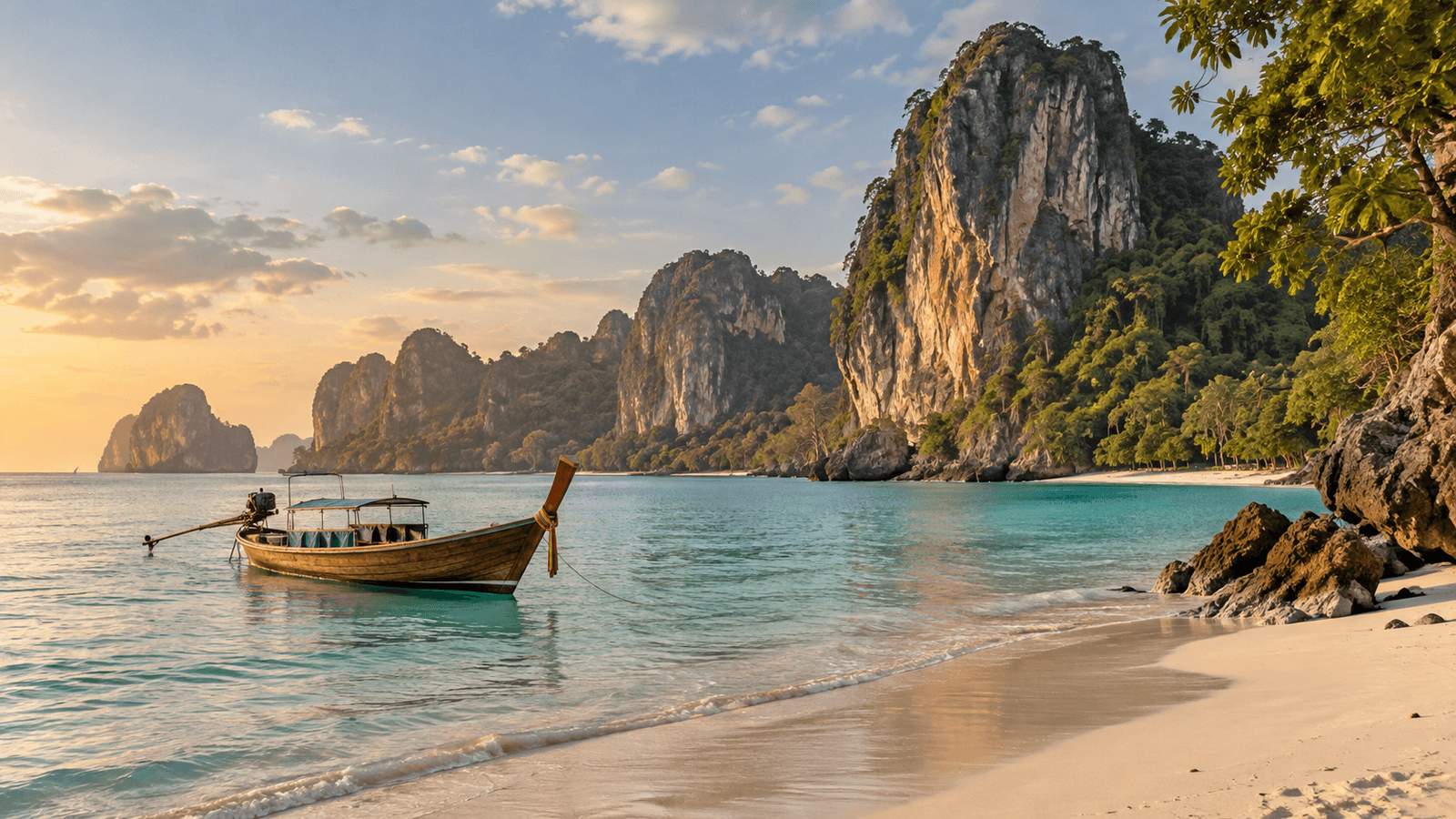
Do not treat all Thai beaches as one weather region. The Tourism Authority of Thailand's seasonal overview places its Ko Tao example in June–September and Phuket/Krabi examples in January–April. It is broad orientation, not a forecast or a source for current fares. Choose a coast first, then check local conditions and boat operations near departure.
Keep the reserve for changes you have not booked
Our reserves are round editorial allowances, not an insurance recommendation or a universal percentage. Test yours against a replacement transfer, an extra night and the remaining itinerary. If current flight quotes already exceed the transport block, increase that block now; do not label the difference an unexpected cost.
During the trip, check spending after Bangkok and before moving to the coast. Separate paid rooms and booked transfers from money left for meals and activities. That makes a quiet beach day useful without turning every meal into an accounting exercise.
WanderSpend lets you record expenses in baht, compare spending with a planned budget and allocate shared costs. Its official budget guide explains the workflow.
Thailand travel budget FAQ
How much money do I need for two weeks in Thailand?
Our illustrative 14-day budgets are THB 21,150, THB 38,000 and THB 67,400 per person, including 13 nights, spending, domestic travel and a reserve. International flights, insurance and other stated extras are excluded. Replace the assumptions with quotes for your dates.
What could four weeks in Thailand cost?
The equivalent 28-day examples total THB 40,750, THB 73,900 and THB 131,600 per person for 27 nights. These are editorial planning scenarios, not measured averages or guaranteed prices.
Are the private-room budgets valid for solo travelers?
They assume two adults sharing a room. A solo traveler using the same room must pay the full nightly price; the dorm-bed scenario is already priced for one person.
Does a night train replace a hotel night in the budget?
Only if you actually cancel that accommodation night. Remove its room cost and add the complete sleeper fare under intercity transport. The published examples assume all 13 or 27 nights are paid accommodation.
Should I exchange the entire budget into cash?
No. The budget is a total spending allowance, not a suggested cash holding. Separate bookings, card payments and cash expenses, and check your own bank and payment-provider fees.
Sources and calculation basis
Checked September 8, 2026. The Grand Palace supports the specific admission figure; TAT supports seasonal orientation; SRT is the official train-booking reference; WanderSpend supports the product description. None is presented as a source for average hotel, food or total trip prices. All other amounts are our stated planning inputs.
For your trip planning
Travel Services
Compare data plans for the length of your stay and choose individual city or coastal outings. Check inclusions and transfer costs before adding them to the sample budget.
Affiliate offers: We may earn a commission if you book. External search forms load only when opened, sharing data with Travelpayouts and the provider.
Turn the Thailand examples into your own budget
Work out your spending plan, choose how to record expenses and agree on shared costs.
Article
How to Plan a Budget Trip: 5 Steps, Formula & Example
Replace the Thailand assumptions with your own fixed costs, daily allowances and separate contingency.
Read the article
Article
Best Travel Budget Apps 2026: Track Expenses & Split Costs
Compare expense tracking, multiple currencies and shared-cost tools before choosing your routine.
Read the article
Article
Group Travel Budget: Plan Costs Before You Book
Agree which rooms, transfers and excursions belong in the shared budget when travelling as a couple or with friends.
Read the article