Articles
Group Travel Budget: Plan Costs Before You Book
Build a shared spending range before departure, show each person the likely commitment and keep enough flexibility for the real trip.
A group travel budget should answer three questions before the first major booking: What can the group spend in total, what is the likely commitment per person and how much flexibility remains?
This article is about that planning layer. The later question of who paid and who ultimately bears each expense belongs to the separate guide to splitting group travel expenses.
For a shared winter trip, our family ski holiday budget shows how accommodation, passes, lessons and equipment hire fit together. When several families travel together, keep different children's costs separate from the shared accommodation budget.
Phase 1: plan the group budget before departure
Start with costs that are already reasonably certain:
- accommodation
- transport to and from the destination
- hire car or rail passes
- pre-booked activities
- shared insurance or visas where relevant
Then add variable categories:
- food and drinks
- fuel, tolls and parking
- spontaneous activities
- local transport
- shared groceries
Personal shopping, souvenirs and individual upgrades do not belong in the shared budget. They can still remain visible in a personal travel budget.
Example: four people on a ten-day road trip
| Category | Group budget | Per person |
|---|---|---|
| Accommodation | EUR 2,400 | EUR 600 |
| Hire car, fuel and parking | EUR 1,200 | EUR 300 |
| Food and shared groceries | EUR 1,000 | EUR 250 |
| Activities | EUR 600 | EUR 150 |
| Contingency | EUR 600 | EUR 150 |
| Total | EUR 5,800 | EUR 1,450 |
The per-person figure is a planning estimate, not an invoice. Record known exceptions such as a larger room or a late arrival separately so everyone sees a realistic commitment before agreeing to the trip.
Keep contingency separate
A dedicated contingency is easier to understand than artificially inflated category budgets. Ten to fifteen percent of variable costs is often useful for predictable trips. Long road trips, uncertain exchange rates or volatile transport prices may justify more.
The contingency is not a spending target. It absorbs deviations without forcing the group to rebuild the plan after every expensive fuel stop.
Phase 2: turn categories into real decisions
For every large category, mark four things:
- the agreed ceiling
- what is already booked
- what remains flexible
- the date when the group must decide
Accommodation and transport usually become fixed first. Food, fuel and spontaneous activities stay flexible. This distinction shows where the group can still react if an early booking costs more than expected.
Phase 3: compare actual spending with the plan
Use a light review rhythm:
- every two or three days: add actual spending and check the categories with the largest deviation
- halfway through the trip: forecast the remaining accommodation, transport and activity costs
- before another large booking: decide whether it fits the category or must use part of the contingency
Do not rebuild the full plan after every coffee. Review the categories that can still change and leave already settled decisions alone.
Handle multiple currencies consistently
Choose one planning currency. Keep the original amount and the converted budget value so the group can compare like with like. For larger card payments, replace the estimate with the final booked amount once it is available.
Do not change the working exchange rate every day. A consistent planning rate makes deviations easier to understand; the final charged amount belongs in actual spending.
Keep the group budget with the trip
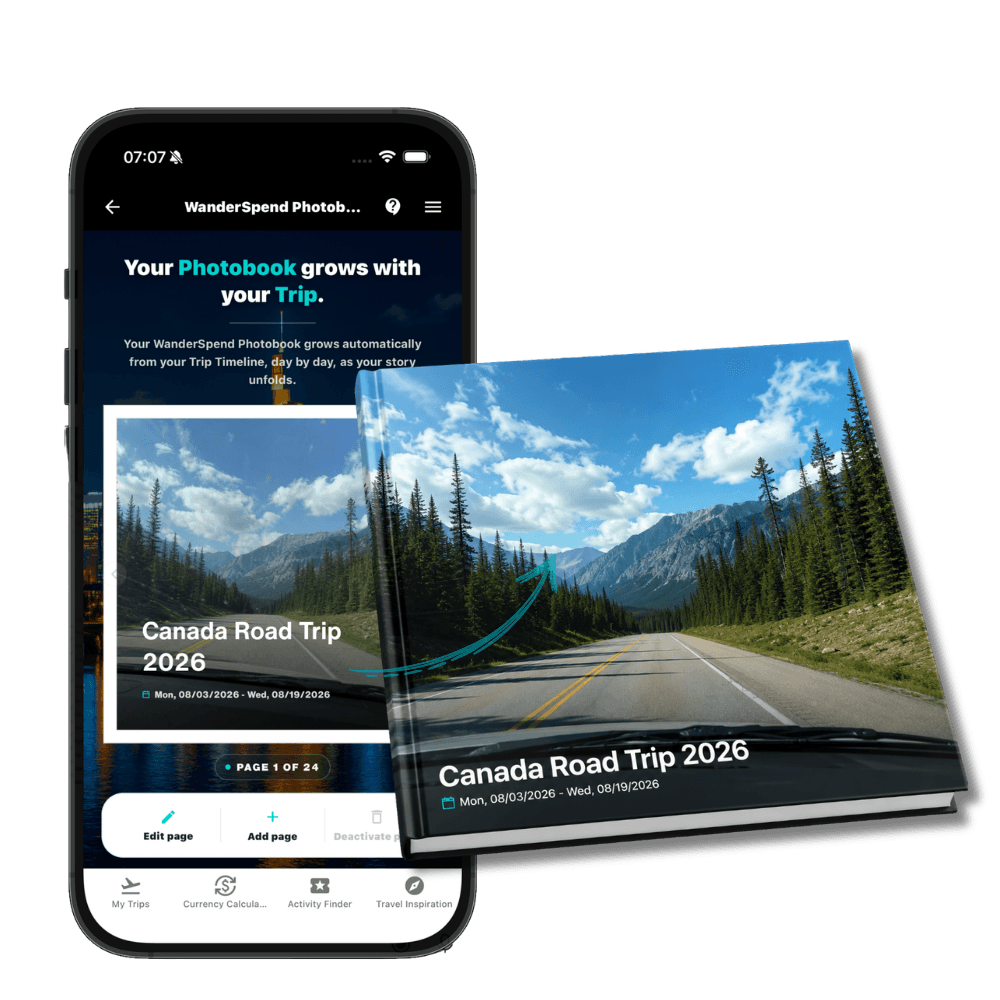
WanderSpend connects the planned budget with categories, currencies, actual expenses and the rest of the trip. It currently uses one centrally managed trip. Compare travel expense splitting apps when everyone must maintain the same expense list from their own account.
The individual steps are explained in the WanderSpend guide to travel budgets, Cost Split and trip balances.
The halfway budget review
At the midpoint or before the next expensive booking, check five points:
- Are all fixed bookings included at their final price?
- Which flexible category is furthest above or below plan?
- What large costs are still unavoidable?
- Is the contingency still intact?
- Does the revised per-person estimate remain acceptable to everyone?
The result should be a decision: reduce one category, use part of the reserve or confirm that the remaining plan still fits.
Group travel budget FAQ
Should the group budget be planned per person or in total?
Both. The total guides shared decisions; the per-person estimate shows whether the trip is financially realistic for everyone.
Which costs belong in the shared group budget?
Include accommodation, shared transport, agreed activities and other costs the group deliberately uses together. Keep personal extras outside the shared estimate.
How often should the group review the budget?
Update actual spending every few days and make one deeper forecast check halfway through the trip or before another large booking.
How much contingency should be included?
Ten to fifteen percent of variable costs is often a reasonable starting point for predictable trips. Adjust it to the route and uncertainty.
Final thought
A useful group travel budget is not one number. It is a shared range with visible assumptions, category limits and enough flexibility for the real trip.
Once the trip starts, the guide to splitting group travel expenses explains payer, cost-share and final balance logic without duplicating the planning work here.