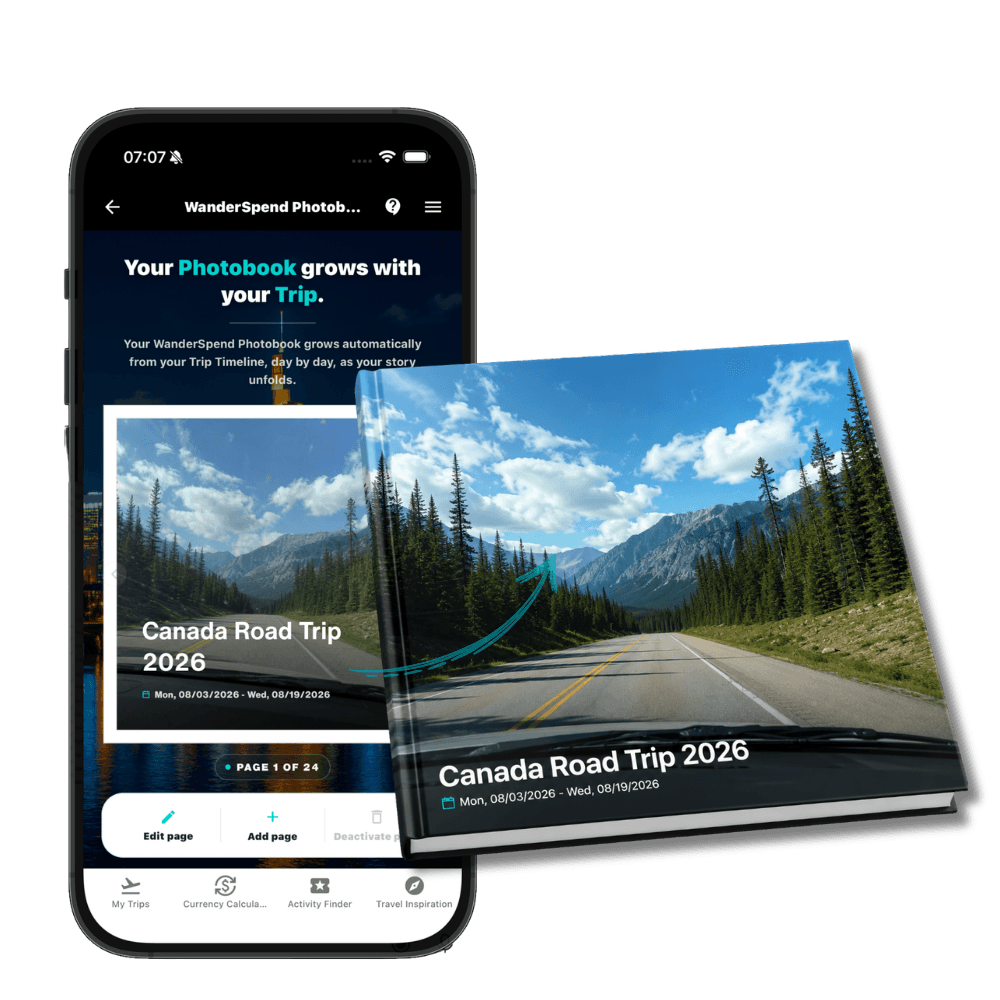
Alternatives comparison
Best Wanderlog Alternatives for Trip Planning in 2026
A practical guide to the best Wanderlog alternatives for trip planning, road trips, private organization, budgets, maps, transport research and travel memories.
Keep comparing
Narrow down the choice
These comparisons are the best match for the decision you are making now.
Wanderlog is one of the strongest names in itinerary planning. It is useful when you are building a trip before departure: collecting places, arranging days, planning routes, importing reservations and collaborating with other people.
But not every traveler needs a planning-heavy workspace.
Some travelers want a quieter private trip space. Some mainly need reservation organization. Others need maps, offline navigation, transport research, route tracking or budget context. That is where Wanderlog alternatives make sense.
This guide compares alternatives by workflow, not by pretending every app solves the same problem.
Quick verdict
Best private Wanderlog alternative
WanderSpend is the strongest fit if Wanderlog feels too planning-heavy and you want a calm private space for places, Trip Map, timeline, documents, notes, budgets and memories.
Best planning-heavy alternative
Lambus is the closest fit if you still want a broad all-in-one planner with itinerary structure, group planning, documents and expenses.
Best reservation organizer
TripIt is strongest when your main problem is keeping flights, hotels and bookings in one itinerary instead of planning every stop manually.
Best route and transport stack
Google Maps and Rome2Rio are better specialist tools for navigation and transport research, but they are not full private trip spaces.
Wanderlog alternatives compared
| Criteria | WanderSpendOur app | Lambus | TripIt | Google Maps | Rome2Rio | Polarsteps |
|---|---|---|---|---|---|---|
| Primary workflow | Private trip space with places, Trip Map, timeline, documents, notes, budget and memories | All-in-one trip planner for itineraries, stops, documents, expenses and group planning | Travel plan and reservation organization in an itinerary format | Navigation, saved places, local discovery and offline maps | Transport route research across modes and destinations | Travel tracking, sharing and route-based memories |
| Best when | You want the trip organized privately before, during and after travel | You still want detailed itinerary structure and collaboration | Your bookings are the main source of travel information | Navigation and place decisions matter most | You need to understand how to get from one place to another | You want the route itself to become a shareable travel story |
| Budget context | Expenses, shared costs, exchange rates and currency calculator live inside the trip | Expenses are part of the planner; advanced export and currency features are listed under PRO | Not primarily positioned as a travel budget app | Not a travel budget app | Useful for transport research, but not an expense tracker | Not positioned as a budget-first app |
| Privacy fit | Privacy-first, calm and not social-media-like | Account-based collaborative planning workspace | Account-based travel organizer; check current privacy settings before storing sensitive plans | Powerful map tool; privacy expectations should be checked in Google account settings | Research tool rather than a private trip archive | Privacy controls exist, but tracking and sharing are central to the product |
| Best role in a travel stack | Core private trip space | Planning workspace | Booking organizer | Navigation layer | Transport research layer | Tracking and memory layer |
Why look for a Wanderlog alternative?
Wanderlog is a good fit when the trip is still being assembled. It helps with the planning phase: places, routes, reservations, collaboration and itinerary structure.
The reasons to look elsewhere are usually about the center of gravity:
- you want less planning overhead
- you want a more private personal travel space
- you want budgeting closer to the trip story
- you want transport research rather than itinerary editing
- you want navigation rather than a planner
- you want route tracking or memories after the trip
The right alternative depends on which of those problems is most important.
Best for private trip organization: WanderSpend
WanderSpend is the best Wanderlog alternative if you want the trip to feel more personal and less like a planning board.
It is built around a private trip space:
- places and Trip Map
- trip days and timeline
- documents and notes
- expenses and shared costs
- exchange rates and currency calculator
- memories after the trip
The key difference is emotional and practical. Wanderlog is strong at building an itinerary. WanderSpend is strong at keeping the trip itself organized once plans, documents, money and memories start to mix.
That makes WanderSpend a better fit if you want your travel information to feel calm, useful and private rather than collaborative or dashboard-heavy.
Strengths
- + Calm private trip-space concept
- + Maps, timeline, documents, notes, budgets and memories live together
- + Budgeting is part of the travel context, not a separate finance dashboard
- + Free, no subscriptions, no ads and privacy-first positioning
- + Good fit before, during and after a trip
Limitations
- - Younger than established planner apps
- - Not designed as a public travel social network
- - Not as planning-heavy as Wanderlog or Lambus for detailed pre-trip itinerary building
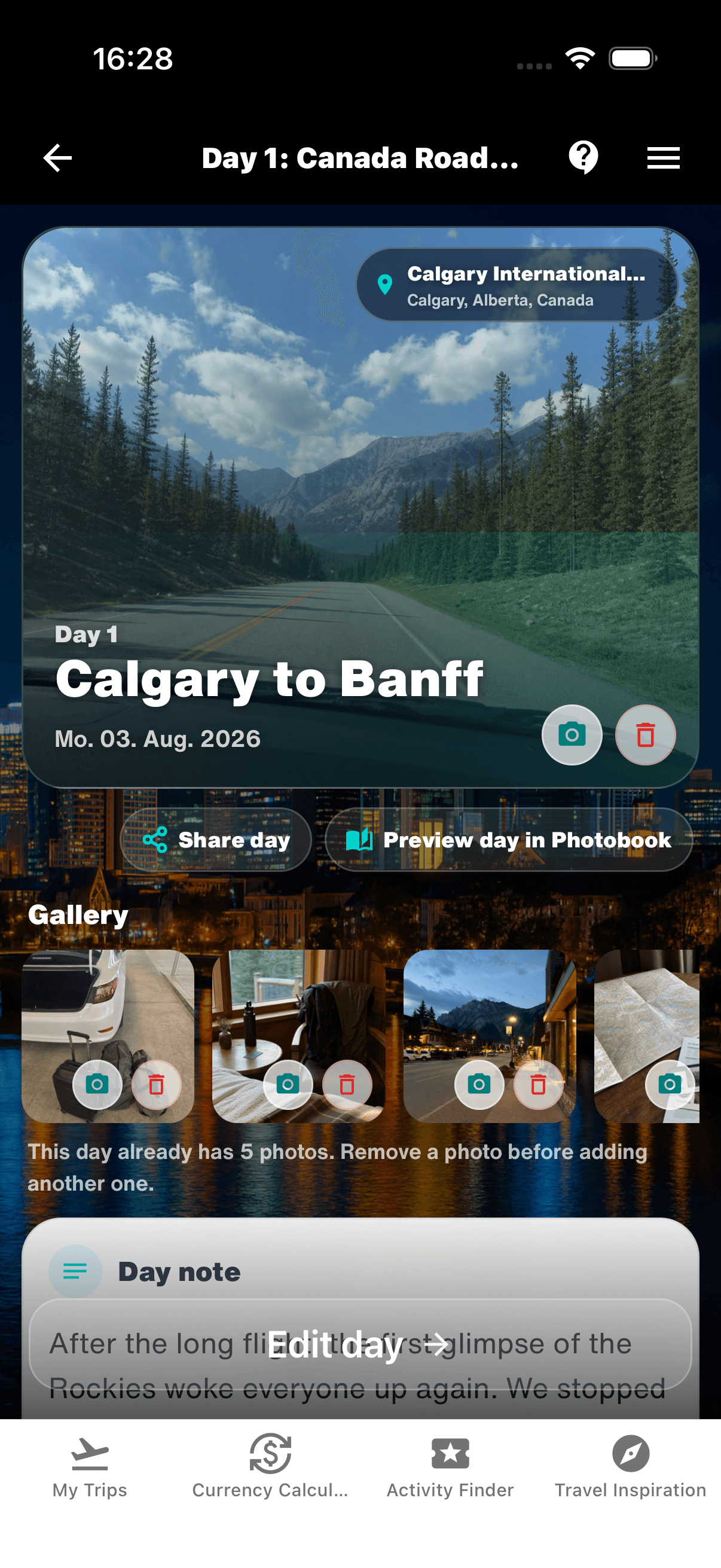
Planned places become real travel days

Best for planning-heavy groups: Lambus
Lambus is the most natural Wanderlog alternative if you still want a broad trip planner.
It is built for stops, itineraries, documents, expenses and group planning. The official PRO page also lists advanced features such as route planning, export options, foreign currencies and weather updates.
Choose Lambus if the real problem is operational planning:
- many stops
- several people
- booking documents
- shared planning decisions
- route or export needs
- a trip that benefits from a structured workspace
The trade-off is that Lambus can feel more like a planner than a personal travel memory space. That can be exactly right for complex trips and too much for simpler ones.
Best for booking organization: TripIt
TripIt is different from Wanderlog. It is not mainly about arranging sightseeing stops on a map.
Its value is itinerary organization: keeping travel plans, confirmations and trip details together. That makes it useful if your trip is built around flights, hotels, car rentals and reservations.
TripIt can be a better fit than Wanderlog when:
- bookings are more important than sightseeing lists
- you want confirmation details in one place
- you travel for work or repeat city trips
- your itinerary is defined by reservations rather than free-form planning
It is less suitable if you want a warm travel memory space or a private place for notes, budgets, documents and personal highlights.
Best for navigation and saved places: Google Maps
Google Maps is not a Wanderlog replacement in the full planner sense. It is a navigation and map layer.
That is exactly why many travelers still use it next to a planner. Google Maps is strong for search, directions, transit context, saved places and offline maps in supported areas.
It is a good alternative only if your actual need is:
- where is this place?
- how do I get there?
- can I save places quickly?
- can I download a map for offline use?
If you also want documents, daily notes, budgets and memories, Google Maps will usually need to sit next to another app.
Best for transport research: Rome2Rio
Rome2Rio is useful when the big question is how to move between places.
It compares route options across transport modes and helps you understand whether a trip is better by train, bus, ferry, car or flight. That makes it especially useful in the research phase, before you commit to an itinerary.
Rome2Rio is not trying to be your private travel archive. It is a route-research tool. Pair it with a core trip app if you want the results, documents, costs and memories to stay organized.
Best for route tracking and memories: Polarsteps
Polarsteps is a strong alternative if the part you like most is the visual story of the route.
It is built around travel tracking, trip maps, sharing and reliving journeys. It can be much better than a planning app if your goal is to record where you went and turn the route into a memory.
The trade-off is that Polarsteps is more tracking- and sharing-oriented. If privacy-first trip organization matters more than route storytelling, WanderSpend is the calmer alternative.
Which alternative should you choose?
Use-case matrix
Wanderlog feels too planning-heavy
WanderSpend
Choose a private trip space when you want maps, days, documents, budgets and memories without a heavy itinerary workspace.
You still need a full group planner
Lambus
Choose Lambus when collaboration, stops, documents and structured planning are the core job.
Bookings are the trip backbone
TripIt
Choose TripIt when flights, hotels and reservations are more important than free-form place planning.
You need directions and saved places
Google Maps
Use Google Maps as the navigation layer, especially when offline maps matter.
You are comparing transport options
Rome2Rio
Use Rome2Rio before locking the route, then save the chosen plan elsewhere.
You want a route-based travel story
Polarsteps
Choose Polarsteps when tracking and sharing the journey are central.
Final verdict
Choose WanderSpend if you want the best private Wanderlog alternative for places, maps, documents, budgets, timeline and memories.
Choose Lambus if you still want a planning-heavy workspace.
Choose TripIt if booking organization matters more than itinerary design.
Choose Google Maps and Rome2Rio as specialist tools for navigation and transport research.
Choose Polarsteps if route tracking and travel storytelling matter most.
For a deeper direct comparison, read Wanderlog vs WanderSpend. If privacy is the main concern, continue with private travel apps.
Related travel app comparisons
Wanderlog Cost 2026 vs WanderSpend: Free or Pro?
Wanderlog Free covers core itinerary planning; Pro adds offline access and advanced route tools. Compare both with WanderSpend's free private trip space.
Lambus vs WanderSpend: Which Travel Planner Is Better?
Choose Lambus for collaborative itinerary and route planning; choose WanderSpend for a calmer privacy-first trip space with maps, budgets, documents and memories.
Best Travel Apps 2026: 9 Picks for Planning, Tracking and Budget
Nine travel apps, nine distinct jobs: choose a core trip app first, then add only the navigation, booking or packing tools you actually need.
Best Private Travel Apps for Planning, Budgets and Memories in 2026
Private travel apps should make trips easier without turning your journey into a public feed. This guide compares private-first organization, tracking, maps, budgets and booking workflows.
Best Travel Budget Apps 2026: 4 Free Expense Trackers
TravelSpend is strongest for focused expense tracking; WanderSpend for a free private trip budget; Lambus for planning; Splitwise for simple cost sharing.
FAQ
What is the best Wanderlog alternative?+
The best Wanderlog alternative depends on the workflow. WanderSpend fits private trip organization and budget context, Lambus fits planning-heavy group trips, TripIt fits reservation organization, Google Maps fits navigation, Rome2Rio fits transport research and Polarsteps fits route tracking and memories.
Which Wanderlog alternative is best for privacy?+
WanderSpend is the clearest fit if you want a private-first trip space instead of a planning workspace or public travel sharing experience.
Which Wanderlog alternative is best for road trips?+
Lambus is worth comparing for structured multi-stop planning, Google Maps is essential for navigation and WanderSpend works well once you want places, days, documents, budgets and memories to stay together privately.
Sources and verification notes
Official Wanderlog positioning for itinerary planning, maps, road trips, collaboration and web/mobile use.
Last checked: 2026-06-21
Official Wanderlog Pro page used to verify the existence of a paid Pro layer and related product context.
Last checked: 2026-06-21
Official WanderSpend positioning, privacy-first travel organization and public app links.
Last checked: 2026-06-21
Official Lambus positioning for all-in-one trip planning, group planning, documents and expenses.
Last checked: 2026-06-21
Official Lambus PRO feature page used to verify advanced planning, export, currency and trip workflow features.
Last checked: 2026-06-21
Official TripIt positioning for organizing travel plans and itineraries.
Last checked: 2026-06-21
Official Google Maps positioning for navigation, places and maps.
Last checked: 2026-06-21
Google Maps Help - Offline maps
Official Google Maps help page used to verify offline map support.
Last checked: 2026-06-21
Official Rome2Rio positioning for comparing transport routes and travel options.
Last checked: 2026-06-21
Official Polarsteps positioning for travel tracking, sharing and travel memories.
Last checked: 2026-06-21