
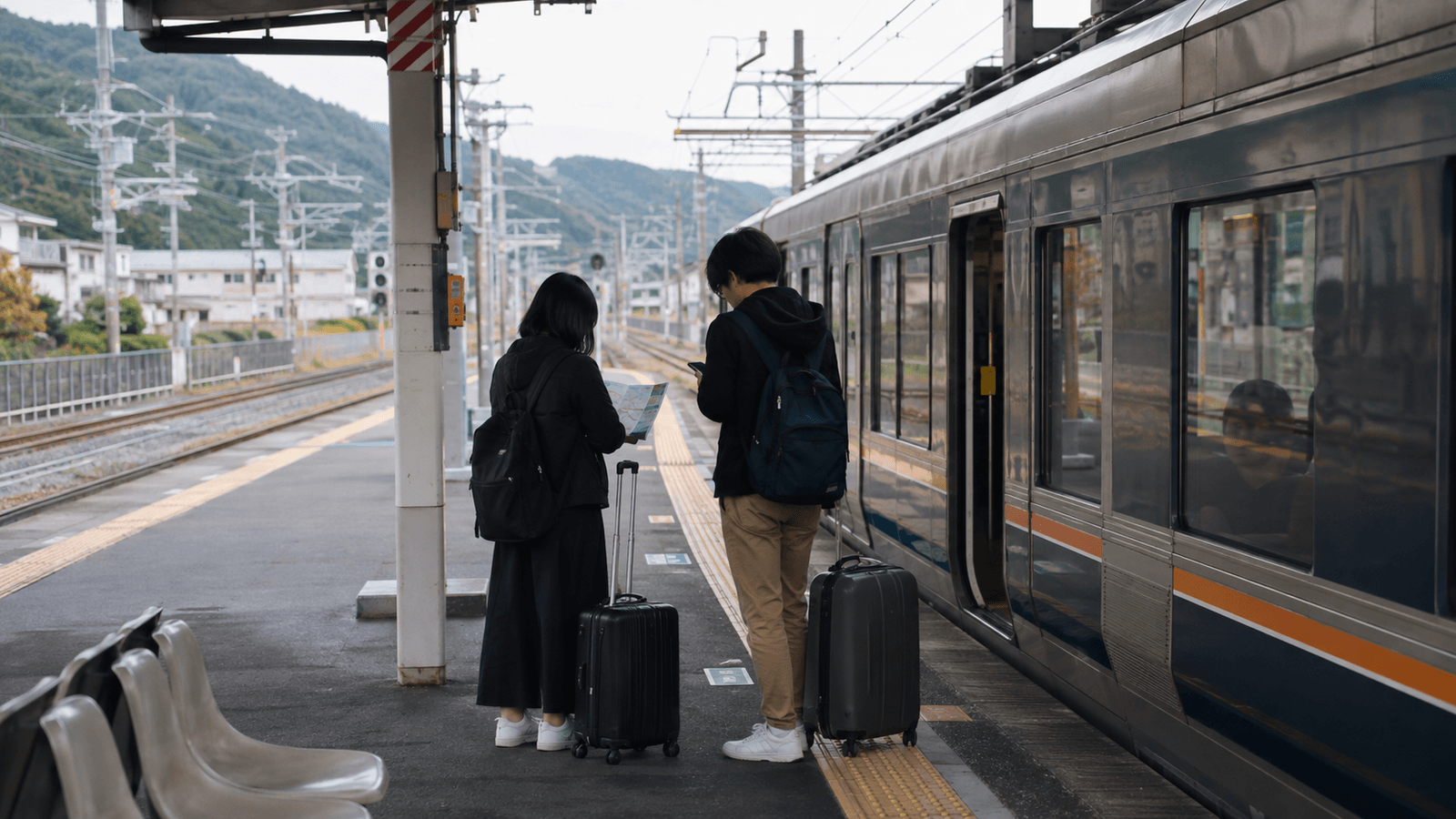
Guide
Kyoto vs Osaka: Which Is the Better Base?
Kyoto vs Osaka as a base: compare temple mornings, food nights, train time, day trips and Kansai Airport access before choosing where to stay.
Save it for later on this device or print a clean planning copy.
Quick facts
- Best time
- March-May and October-November for comfortable city days, Winter for quieter Kyoto mornings and year-round Osaka food evenings, Summer with slower pacing for heat, humidity and rain
- Recommended duration
- 3-7 nights in Kansai
- Budget range
- Low: 80-150 EUR/person/day · Mid: 160-300 EUR/person/day · Comfort: 380+ EUR/person/day
- With kids
- Yes
Quick decision
Kyoto or Osaka as your base?
Kyoto is the better first base for culture and early sightseeing. Osaka is the better urban base for food, nightlife and selected transport plans. One base is enough for most 3-5-night stays.
| Criteria | Kyoto | Osaka |
|---|---|---|
| Best for | Temple mornings, traditional areas and a first culture-focused trip | Food evenings, urban energy and a more flexible city rhythm |
| Main advantage | You are already in Kyoto before the busiest sightseeing hours | Strong restaurant choice and useful Umeda, Namba and Shin-Osaka connections |
| Main trade-off | Hotels can be expensive and cross-city buses slow at busy times | Every Kyoto day adds a rail trip plus local travel to the actual sight |
| Best hotel logic | Downtown for evenings or Kyoto Station for rail-heavy days | Umeda for Kyoto connections or Namba for food and KIX access |
| Airport logic | Direct Haruka to KIX, but a longer airport journey | Faster options from Namba or Tennoji depending on the hotel |
Orientation
Why the right Kansai base changes more than your train time
Kyoto and Osaka are close enough for day trips, but they do not create the same daily rhythm. Kyoto rewards sleeping near the areas you want to see before 9:00. Osaka is stronger when dinner, late city energy and a practical western rail or airport connection matter more than a quiet temple start.
The useful comparison is not simply Kyoto Station versus Osaka Station. Your hotel district, the line serving the day's first stop and the number of repeated commutes decide whether a base feels efficient.
Budget bands are rough daily planning allowances per person for two adults sharing a room, including food and local transport. Long-distance travel and flights are extra; Osaka is not automatically cheaper without comparing equivalent dates.

On a first Japan trip, I would protect three Kyoto nights and visit Osaka once in the evening. I would switch to Osaka only when its food and night atmosphere are a real priority or the route continues west and the hotel move earns its place.
Alex Travels · TravelHighlights.io
Keep planning
Choose the next useful step
Jump straight to the next relevant part of your trip.
Guide map
- Downtown Kyoto / Kawaramachi
- Kyoto Station
- Umeda / Osaka Station
- Namba
Itinerary
Suggested itinerary
Four nights in Kyoto
Best for a first trip where Kyoto is the reason for staying in Kansai.
- 1Day 1: Arrive in Kyoto and take a short walk downtown or through Gion
- 2Day 2: Higashiyama before the busiest hours
- 3Day 3: Arashiyama or northern Kyoto
- 4Day 4: Fushimi Inari, Nara or an Osaka evening
- 5Day 5: departure; with only three nights, omit the extra outing on day 4.
4-5 nights - choose one base by priority
Keep one hotel and use the rail network selectively.
- 1Kyoto base: two Kyoto days, Nara and one Osaka afternoon/evening
- 2Osaka base: one focused Kyoto day, Nara and two Osaka blocks
6-7 nights - split only with a reason
Useful when both Kyoto mornings and Osaka nights are non-negotiable.
- 1Three or four Kyoto nights for the culture-heavy first half
- 2Two or three Osaka nights for food, Nara, Himeji or onward travel
Interactive packing list
Packing list for Japan
Powered by Plantrip
Check off the essentials as you prepare. This interactive list is provided by PlanTrip.
Bases
Best base areas
Best for
Downtown Kyoto / Kawaramachi
Kyoto atmosphere, food and early Higashiyama access
Pros
- Walkable evenings near Gion and central restaurants
- Better start for east-side Kyoto than commuting from Osaka
Watch-outs
- Less direct for some Shinkansen and airport departures
- Popular hotels can be expensive
Best for
Kyoto Station area
Rail-heavy itineraries and luggage
Pros
- Direct access to Osaka, Nara, Tokyo and KIX trains
- Easier transfers with bags
Watch-outs
- Less atmospheric than downtown Kyoto
- Several temple areas still need local transport
Best for
Umeda / Osaka Station
Osaka base with frequent Kyoto trips
Pros
- Direct JR and Hankyu choices toward Kyoto
- Strong food, shopping and regional rail connections
Watch-outs
- Large station complex takes time to learn
- Not the classic Namba evening atmosphere
Best for
Namba
Food nights and Kansai Airport access
Pros
- Walkable access to Dotonbori and south Osaka
- Direct Nankai trains to KIX
Watch-outs
- Less efficient than Umeda for repeated Kyoto days
- Busy and noisy around the main entertainment streets
Planning notes
Avoid These Common Mistakes
Comparing only Kyoto Station and Osaka Station
Door-to-door time changes with the hotel district and the line serving the first sight.
Commuting to Kyoto on several early mornings
A 30-minute intercity train does not include reaching the station or crossing Kyoto afterward.
Moving hotels for one dinner
Osaka works as an evening trip from Kyoto when a late night is not the main purpose of the stay.
Assuming Osaka is always cheaper
Compare equivalent dates and station areas; peak demand can remove the expected hotel saving.
Choosing the base only for the airport
One airport transfer rarely outweighs several inefficient sightseeing mornings.
Travel planning answers
Kyoto vs Osaka base FAQ
Is it better to stay in Kyoto or Osaka?+
Stay in Kyoto when temples, traditional districts and early starts are the priority. Stay in Osaka for food, later evenings, selected western day trips or when Kyoto is only one part of the Kansai plan.
Can you visit Kyoto from Osaka every day?+
Yes, but repeated commuting adds more than the roughly 30-45 minute station-to-station ride. Reaching the Osaka departure station and the Kyoto sight can make each day substantially longer.
How fast is the train from Osaka to Kyoto?+
The Kyoto City Official Travel Guide lists about 30 minutes from JR Osaka Station to Kyoto Station on the Special Rapid Service and about 45 minutes from Osaka-Umeda to Kyoto-Kawaramachi on Hankyu.
Which Osaka area is best for Kyoto day trips?+
Umeda or Osaka Station is the clearest choice for frequent Kyoto travel. Namba is better when food evenings and direct Nankai airport access matter more.
Which base is better for Nara?+
Both work, but compare the actual stations and services. Nara Tourism lists about 34 minutes from Osaka-Namba to Kintetsu-Nara, versus about 52 minutes from JR Osaka to JR Nara. Add the journey from your hotel and the walk to the park.
Should you split the stay between Kyoto and Osaka?+
Split six or seven nights when you want both early Kyoto mornings and late Osaka evenings. For three to five nights, one well-chosen base usually saves more time than a hotel change.
Which city is easier for Kansai Airport?+
Compare the journey from your hotel: Namba has Nankai trains to KIX; Kyoto Station has direct Haruka services. Kyoto’s official guide gives about 80 minutes for Haruka. Check the service, departure time and journey to the terminal.
Worth it / Skip if
Worth it
Yes. Choose Kyoto when temple mornings and atmosphere are the priority; choose Osaka for food, late evenings, some western day trips and simpler Namba-side airport access. Split the stay only when both cities need their own early or late hours.
Skip if
Do not change hotels just to spend one Osaka evening or one Kyoto day. The cities are well connected, and a single base is usually calmer for a short Kansai stay.
With kids
Kyoto reduces early temple-day travel, while Osaka offers easier food choice and urban breaks. Choose the hotel by the station you will actually use and avoid peak-hour commuting with luggage or a stroller.
Budget range
Low
80-150 EUR/person/day
Mid
160-300 EUR/person/day
Comfort
380+ EUR/person/day
Guide details
The short answer: stay in Kyoto when this is your first Kansai visit and temples, traditional streets and early starts are the priority. Stay in Osaka when food, late evenings, urban energy or the next western rail leg matters more. For most 3-5-night stays, one well-positioned hotel is better than changing bases.
Which base is better for a first Japan trip?
Kyoto is the stronger default for a culture-focused first trip. Sleeping in the city protects the hours before popular areas become busiest and makes it easier to treat Higashiyama, Arashiyama or Fushimi Inari as a real morning rather than the second half of a commute.
Use the Kyoto Highlights guide to decide whether you need three or four nights and which areas deserve an early start.
Osaka is the better base when Kyoto is only one day in a wider Kansai plan. It also fits travelers who value dinner choice, late energy and easier movement toward Kobe, Himeji, Hiroshima or Kansai Airport more than a quiet Kyoto morning.
When Kyoto is the better base
Choose Kyoto when you want at least two full Kyoto days. The city's famous areas are spread out, and the official tourism guidance recommends mixing trains, subways and buses to avoid congestion. Starting locally removes one intercity leg before that internal travel even begins.
Downtown around Kawaramachi or Sanjo is better for atmosphere, restaurants and Gion-side evenings. Kyoto Station is better for luggage, Nara, Osaka, Shinkansen and airport connections. Neither area is universally central to every temple.
When Osaka is the better base
Choose Osaka when the trip needs an urban evening base rather than several temple mornings. Umeda works best for repeated Kyoto connections; Namba works best for Dotonbori, south-side food and direct Nankai trains to the airport.
The Osaka Highlights guide helps turn the city into more than a hotel location by pairing one useful daytime block with the evening experience.
What the 30-minute train really means
The headline connection is genuinely fast. Kyoto's official guide lists about 30 minutes from JR Osaka Station to Kyoto Station by Special Rapid Service and about 45 minutes from Osaka-Umeda to Kyoto-Kawaramachi on Hankyu.
That is not the full travel day. Add the walk or metro to the Osaka departure station, platform navigation and the journey from the Kyoto arrival station to the first sight. For one Kyoto day this is easy; on three consecutive mornings it becomes a reason to sleep in Kyoto.
Choose the line by destination. JR is useful for Kyoto Station and onward connections, Hankyu for downtown Kyoto and Arashiyama-side logic, and Keihan for parts of eastern Kyoto and Fushimi.
Nara, Himeji and other day trips
Nara does not settle the choice on its own. The official access guide distinguishes the stations: about 34 minutes from Osaka-Namba to Kintetsu-Nara, compared with about 52 minutes from JR Osaka to JR Nara. From Kyoto, it lists roughly 34 minutes by Kintetsu Limited Express or 41 minutes by JR. These are estimates for particular services, not door-to-door times; check the connection and ticket type for your date. Use the Nara day-trip guide to choose a focused park-and-temple day.
Osaka becomes more attractive when Himeji, Kobe or travel farther west follows. Kyoto remains logical when Uji, eastern Kyoto or the next Shinkansen leg toward Tokyo matters more. Look at the whole route, not a single map pin.
Kansai Airport arrival and departure
Namba has Nankai connections to KIX, while Kyoto Station has direct Haruka services. The official Kyoto guide gives around 80 minutes for Haruka. Train time alone is not an airport plan: add the hotel journey, orientation, any terminal transfer and your airline’s required lead time.
Check the actual departure for your date. For an early flight, a final night near the airport may be more useful than changing bases in the middle of your Kansai stay.
Kyoto or Osaka with children
Kyoto reduces early-day transport when temples and traditional areas are the family priority. Osaka gives easier restaurant choice, indoor alternatives and a less temple-heavy rhythm. In either city, a hotel close to the correct station matters more than a vague central location.
Avoid peak-hour intercity travel with luggage or a stroller when possible. A relaxed breakfast and one direct line usually save more family energy than the theoretically fastest connection.
One base or a split stay?
Keep one base for three to five nights. Visit Osaka from Kyoto for an afternoon and dinner, or visit Kyoto from Osaka for one carefully grouped day.
Split six or seven nights when the difference in time of day matters: three or four Kyoto nights for early cultural days, then two or three Osaka nights for food, later evenings and westbound travel. The second hotel should change the experience, not merely the address.
Final recommendation
For a first culture-focused Japan route, choose Kyoto. For a food-led Kansai stay with one Kyoto day, choose Osaka. If both cities are priorities, split only when the stay is long enough to benefit from their different mornings and evenings.
Return to Japan Highlights to place the base decision inside the full Tokyo-Kansai-Hiroshima route.
Sources & Last updated
Last updated: 2026-09-03
Sources
- Kyoto City Official Travel Guide - Getting to Kyoto: JR Osaka–Kyoto about 30 minutes, Hankyu about 45; direct KIX–Kyoto Haruka about 80 minutes.(checked: 2026-09-07)
- Kyoto City Official Travel Guide - Getting around Kyoto: Official guidance on combining trains, subways and buses and avoiding congestion(checked: 2026-09-03)
- Kyoto Travel Congestion Forecast: Official area and time-of-day congestion planning for major Kyoto sights(checked: 2026-09-03)
- Osaka Info - Around Kansai: Official Osaka-base context for Kyoto and other Kansai day trips(checked: 2026-09-03)
- Official Nara Travel Guide - Travel to Nara: Official access context showing Nara is reachable from both Kyoto and Osaka(checked: 2026-09-03)
For your trip planning
Travel Services
Useful services for your trip. Choose what fits your plans.
Affiliate offers: We may earn a commission if you book. External search forms load only when opened, sharing data with Travelpayouts and the provider.
Nearby / next stop
CITY · CULTURE
Essential
Last updated 2026-06-16
Kyoto Highlights
A calmer Kyoto guide for temples, old streets and area-based days that avoid the classic overplanning trap.
Read guide →
CITY · FOOD
Last updated 2026-09-07
Osaka Highlights
Dotonbori, Shinsekai, the castle park or Umeda? Plan your first Osaka visit by neighborhood and decide whether to visit from Kyoto or stay overnight.
Read guide →