Articles
How to Travel on a Budget Without Ruining Your Trip
Budget travel works best when it protects the parts of the trip that matter most. The goal is not to spend as little as possible on every decision. That usually creates a...
Budget travel works best when it protects the parts of the trip that matter most.
The goal is not to spend as little as possible on every decision. That usually creates a different kind of cost: bad locations, rushed transfers, poor sleep, wasted time, and constant mental arithmetic. A better approach is to decide where money actually improves the trip, then reduce friction everywhere else.
This guide is for travelers who want to be careful with money without turning the whole journey into a restriction exercise. It is practical, flexible, and designed for real trips where plans change, prices vary, and comfort still matters.
Start with a budget before the trip starts
The most useful travel budget is not a perfect spreadsheet. It is a clear spending frame.
Before you book the trip, separate your budget into simple categories:
- transport to and from the destination
- accommodation
- local transport
- food and drinks
- tickets, tours, and activities
- practical costs such as luggage, insurance, SIM cards, laundry, and tips
- a buffer for mistakes, delays, or small upgrades
That last category matters. A trip with no buffer often becomes stressful the moment something changes. A delayed train, rainy afternoon, last-minute taxi, or extra bag fee should not make the whole budget feel broken.
You do not need exact numbers for every meal or every metro ride. What helps is knowing your limits before the emotional part of travel begins. Once you are already tired, hungry, or standing in front of a ticket office, it is much harder to make calm decisions.
Choose what is worth paying for
Budget travel becomes easier when you stop treating every cost equally.
Some expenses are just prices. Others change the quality of the trip. A slightly better location can reduce transport time every day. A direct train can save an entire evening. A timed-entry ticket can prevent hours of waiting. In those cases, spending more may actually protect the trip.
A useful question is:
Will this cost save time, reduce stress, improve safety, or make a core experience better?
If the answer is yes, it may be worth keeping. If the answer is mostly "because everyone seems to do it," it deserves a second look.
This is especially true for expensive viewpoints, famous restaurants, packaged day trips, and peak-time attractions. Some are genuinely worthwhile. Others are priced for people who did not pause long enough to compare alternatives.
Avoid tourist traps without becoming cynical
Tourist traps are not always scams. Often they are simply places where convenience, location, and pressure inflate the price.
You can avoid many of them with a few habits:
- check menus before sitting down in very central areas
- compare the official ticket price before buying through a third party
- avoid restaurants where staff aggressively pull people in from the street
- search one or two streets away from a major square or landmark
- look for local transport routes before accepting the first taxi offer
- check whether a popular tour is just a bundled version of things you could do independently
The point is not to reject every popular place. Some famous places are famous for a reason. The better rule is to avoid paying premium prices for low-quality convenience.
If a restaurant has a clear menu, transparent prices, and food you actually want, it can still be a good choice near a landmark. If a tour solves a real logistics problem, it may be worth it. Budget travel is not about suspicion; it is about noticing when you are being rushed into a weak decision.
Be realistic about accommodation
Accommodation is often the biggest controllable cost after flights or long-distance transport. It is also where travelers can accidentally damage the trip by optimizing too hard.
The cheapest room is not always the cheapest option in practice. If it is far from transit, poorly reviewed for noise, or requires long daily transfers, you may pay the difference in transport, time, and energy.
Look for accommodation that balances:
- safe and practical location
- reliable public transport access
- recent reviews that mention cleanliness and noise
- flexible check-in if your arrival time is uncertain
- simple food options nearby
- cancellation terms that match your confidence in the route
For city trips, a modest room in a well-connected neighborhood often beats a nicer room far away. For road trips, staying close to the next morning's route can be more useful than staying in the most atmospheric town. For families or couples, a small apartment with basic kitchen access can reduce food costs without making every meal a project.
Hostels, guesthouses, apartments, budget hotels, and simple business hotels can all work. The right choice depends less on the label and more on whether it supports the rhythm of your trip.
Use public transport where it actually helps
Public transport is one of the strongest budget tools in travel, especially in cities with reliable networks. It reduces taxi costs, parking stress, and the need to stay in the most expensive central block.
Before you arrive, check three things:
- how to get from the airport or train station to your accommodation
- whether day passes or contactless payment are easier than single tickets
- how late the system runs in the evening
This small amount of planning prevents many expensive arrival mistakes. The first hour in a new place is when travelers often overpay because they are tired and carrying luggage.
Public transport is not always the best option. Late-night arrivals, rural routes, heavy bags, small children, or limited service can make a taxi, shuttle, or rental car reasonable. The budget-friendly choice is the one that fits the situation, not the one that looks cheapest on paper.
For destination-specific planning, TravelHighlights budget guides such as the Japan Budget Guide, Iceland Budget Guide, and Southwest USA Budget Guide can help compare the role of trains, rental cars, fuel, and transfers in different trip styles.
Budget food without making meals sad
Food is one of the easiest places to overspend, but it is also one of the easiest places to ruin the mood by cutting too aggressively.
A good travel food budget usually mixes three types of meals:
- simple, low-effort meals that keep the day moving
- one or two meals you genuinely look forward to
- flexible snacks or groceries for long travel days
Breakfast is often the best place to save. If a hotel breakfast is expensive and ordinary, a bakery, supermarket, cafe, or simple takeaway option may be better. Lunch can also stay casual, especially on sightseeing days when a long sit-down meal breaks the rhythm.
Dinner is where many travelers prefer to spend more intentionally. That does not have to mean fine dining. It can mean choosing one good neighborhood restaurant instead of drifting into the closest overpriced place because everyone is tired.
Food markets, bakeries, lunch menus, convenience stores, grocery picnics, and casual local restaurants can all be part of a good trip. The key is to choose them deliberately, not because the budget has become so tight that every meal feels like damage control.
Plan enough to avoid travel chaos
Some travelers resist planning because they do not want the trip to feel overcontrolled. That is understandable. But a basic plan is often what makes a budget feel relaxed.
Chaos is expensive. It creates last-minute bookings, avoidable taxis, missed trains, duplicate routes, and impulse meals in the worst possible locations.
You do not need a rigid hour-by-hour itinerary. You do need a few anchors:
- where you sleep each night
- the main transport connections
- which attractions need advance booking
- which days are naturally expensive
- where you can keep a lighter, cheaper day
This kind of planning gives the trip shape without removing flexibility. You can still change your mind. You are simply less likely to make every decision under pressure.
If you are building a route, start with geography. Group nearby sights together, avoid zigzagging across a city, and leave room between major activities. A calmer route usually costs less because it wastes less time and transport.
Keep documents and expenses organized
Budget travel gets harder when information is scattered across emails, screenshots, notes, apps, and messages.
At minimum, keep a clean folder or app space for:
- accommodation confirmations
- transport tickets
- attraction bookings
- insurance documents
- passport or ID copies where appropriate
- reservation numbers
- emergency contacts
- shared expenses if you travel with others
The same applies to spending. You do not have to record every tiny purchase forever, but tracking during the trip helps you notice patterns before the final day. If food spending is higher than expected, you can adjust calmly. If transport is costing less than planned, you may have room for one experience you were unsure about.
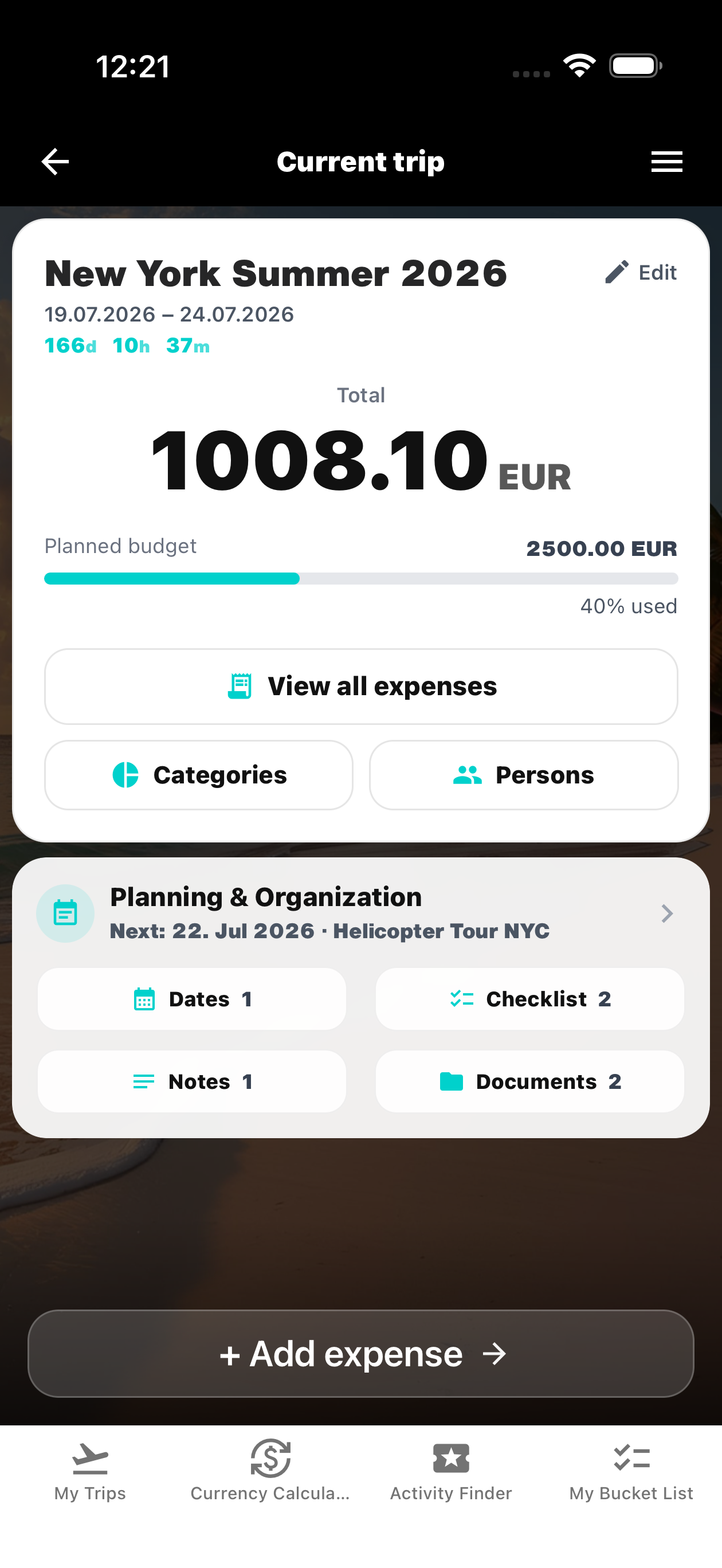
This is where a tool like WanderSpend can fit naturally. It is useful for keeping travel expenses, shared costs, and important documents in one quieter place while the trip is happening. The point is not to obsess over every receipt. It is to reduce the mental clutter that makes budget decisions feel heavier than they need to be.
Spend less on the invisible parts
The best places to save are often the parts of the trip you will barely remember.
Examples:
- avoid paying extra for luggage you do not need
- choose a practical flight time instead of chasing a slightly cheaper but punishing schedule
- bring a reusable bottle where tap water is safe
- pack basic medication and small essentials instead of buying them urgently
- check roaming, eSIM, or local SIM options before arrival
- use laundry strategically on longer trips instead of packing too much
- avoid currency exchange counters with poor rates in high-pressure locations
These choices are not glamorous, but they protect the budget quietly. They also reduce the chance of small annoyances turning into expensive fixes.
Build a budget that still feels like a trip
A good budget should include room for enjoyment. Otherwise, the trip can become technically cheap but emotionally disappointing.
Choose a few things you actively want to protect:
- one memorable meal
- a scenic train ride
- a guided experience that adds real context
- a better-located hotel for the busiest part of the route
- a day with fewer plans and more breathing room
Then save around those priorities. Skip the mediocre extras, not the parts you came for.
This is the difference between budget travel and deprivation travel. Budget travel is selective. Deprivation travel treats every cost as a problem.
A calm budget travel checklist
Before you go:
- define your total spending frame
- separate fixed costs from daily costs
- add a buffer for mistakes and changes
- check which attractions need advance booking
- map your accommodation against transport
- save important documents in one place
- decide which experiences are worth protecting
During the trip:
- track spending lightly but regularly
- avoid making decisions when hungry, tired, or rushed
- use public transport where it fits the situation
- keep one flexible meal option each day
- review the budget every few days instead of every few minutes
- adjust early rather than panicking late
Final thought
Traveling on a budget does not mean removing comfort, spontaneity, or joy. It means giving your money a job.
Spend where it protects the experience. Save where the difference will barely matter. Keep your plans and documents organized enough that the trip stays calm.
That is how budget travel becomes sustainable: not by making the trip feel smaller, but by making every decision clearer.