Guide
Icefields Parkway Guide: Best Stops Between Banff and Jasper
232 km from Lake Louise to Jasper: five stops, a separate Parker Ridge hiking day, and decisions on fuel, overnight stays and mountain weather.
Save it for later on this device or print a clean planning copy.
Quick facts
- Best time
- June–September: longer days; high trails may still hold snow, May and October: confirm accommodation and services individually, Winter: current road conditions, required tyres and daylight determine the plan
- Recommended duration
- 1 full day or 2 slower days
- Budget range
- Low: 120-190 CAD/day · Mid: 240-420 CAD/day · Comfort: 550+ CAD/day
- With kids
- Yes
Orientation
Why the Icefields Parkway deserves a full day
The Icefields Parkway is not just the road between Banff and Jasper. It is one of the core experiences of a Western Canada road trip: glacier views, turquoise lakes, river valleys, waterfalls, wildlife corridors and long stretches with no town in sight.
The planning mistake is treating it like a short transfer. The distance looks manageable, but the day becomes much better when you allow time for stops, weather changes, food, fuel and slower mountain driving.
A strong Parkway plan chooses a handful of high-value stops instead of trying to stop at every pullout. Bow Lake, Peyto Lake, Mistaya Canyon, the Columbia Icefield area and one Jasper-side waterfall already make a full day.

I would protect this day from overplanning. Fill the tank, start early, choose four or five stops you actually care about and let the rest be optional. The Parkway feels best when you still have enough attention left for the final stretch into Jasper.
Alex Travels · TravelHighlights.io
Keep planning
Choose the next useful step
Jump straight to the next relevant part of your trip.
Guide map
- Lake Louise
- Herbert Lake
- Bow Lake
- Peyto Lake / Bow Summit
- Waterfowl Lakes
- Mistaya Canyon
- Saskatchewan River Crossing / The Crossing Resort
- Parker Ridge
- Columbia Icefield / Athabasca Glacier
- Sunwapta Falls
- Athabasca Falls
- Jasper
Highlights
Top highlights
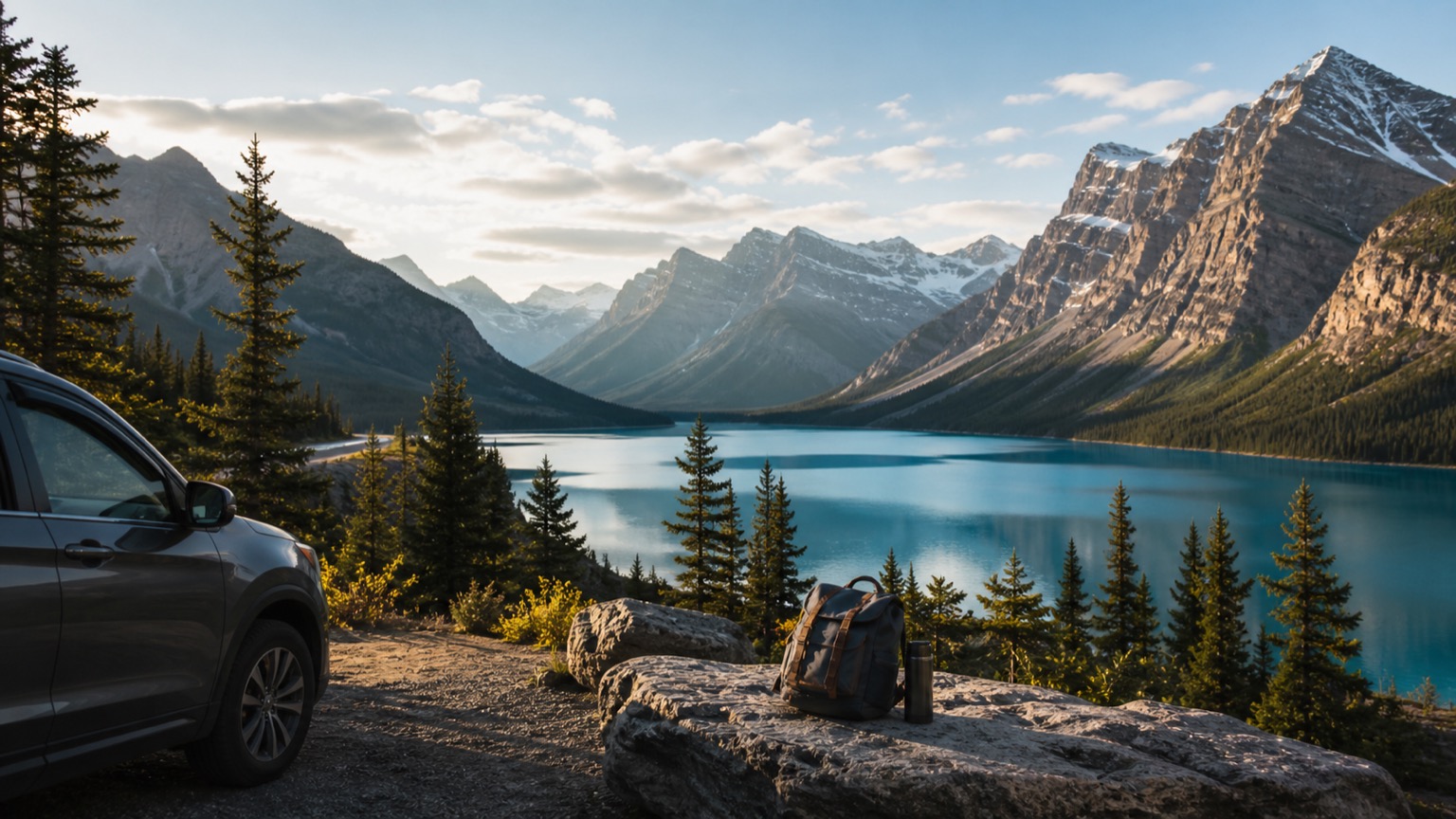
Bow Lake and Peyto Lake
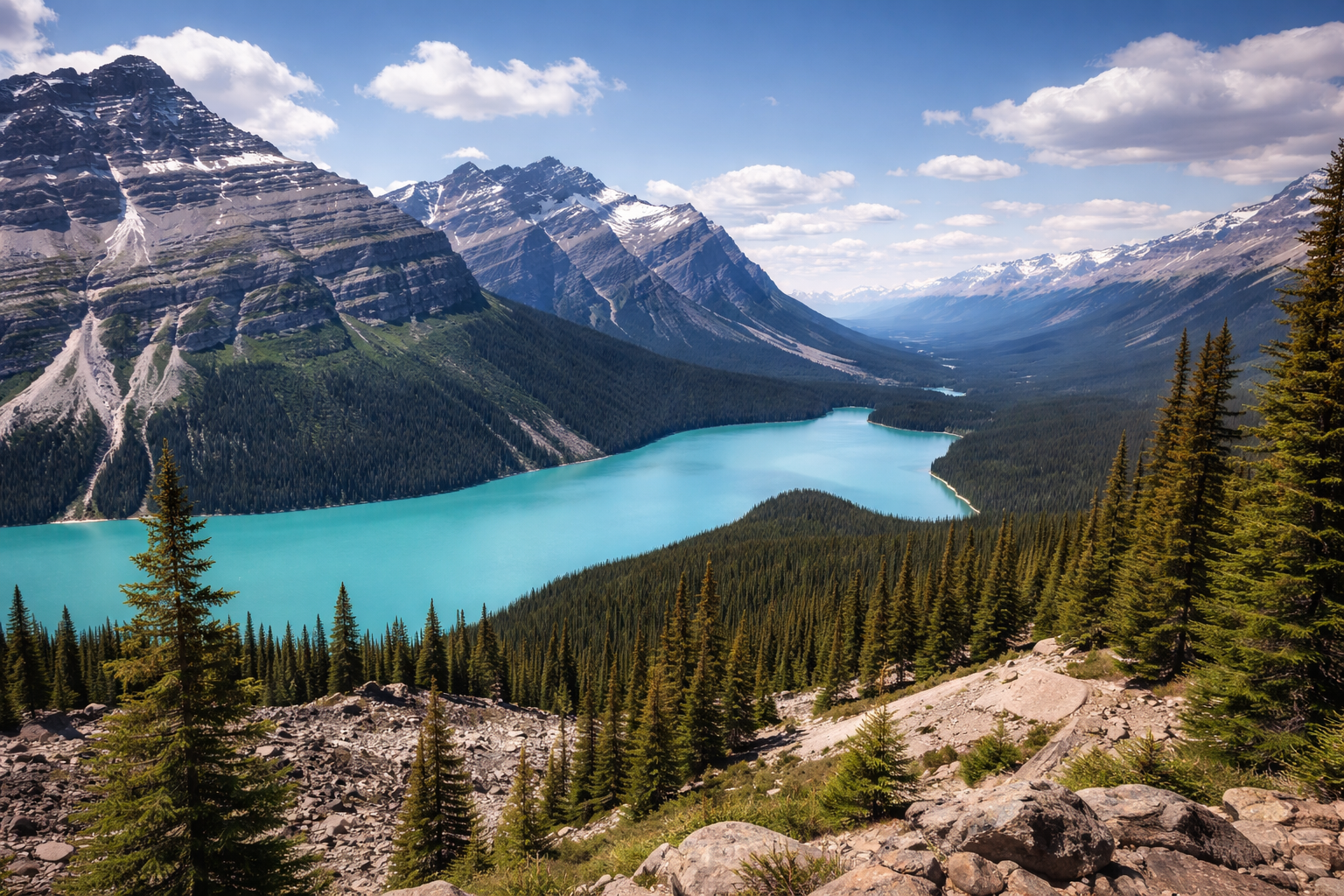
The strongest early Banff-side lake stops: Bow Lake is immediate and open, while Peyto Lake gives one of the best elevated viewpoints on the drive.
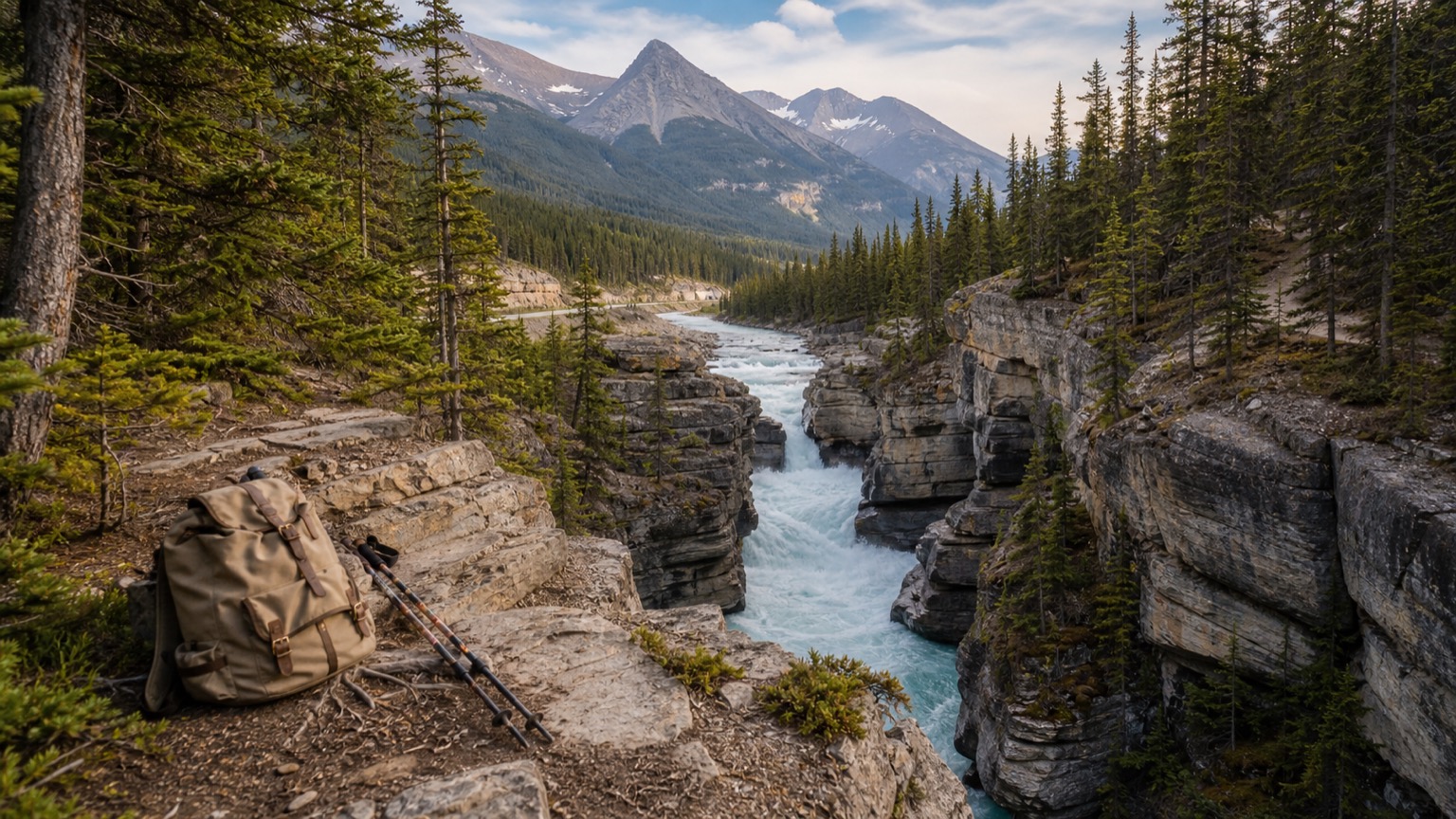
Mistaya Canyon
A short, worthwhile canyon stop that breaks up the drive and gives more texture than another roadside lake pullout.
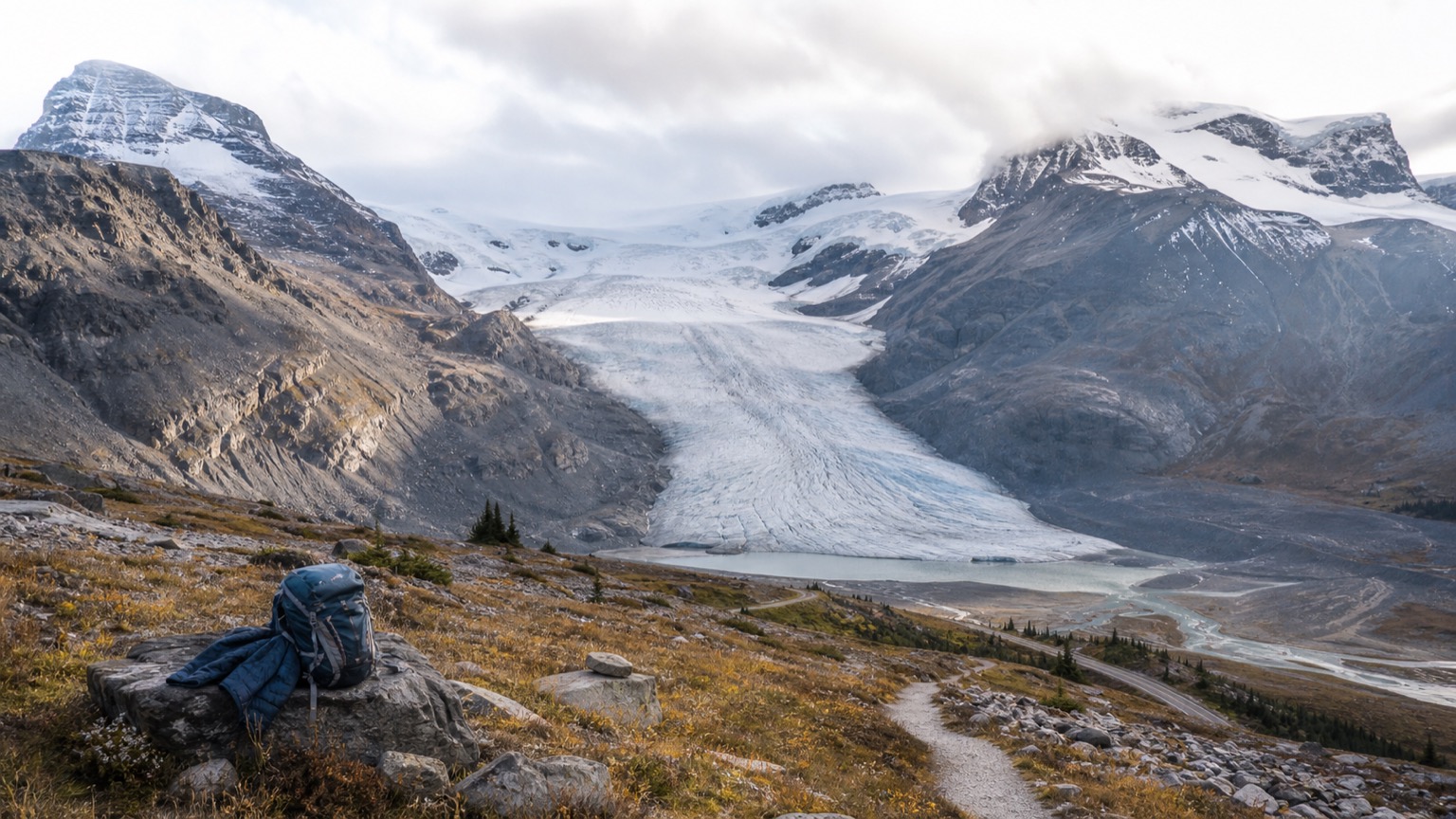
Columbia Icefield and Parker Ridge
A glacier viewpoint fits a drive day. Parker Ridge is a separate moderate hike: 5.4 km return, about 3 hours and 250 m of elevation gain.
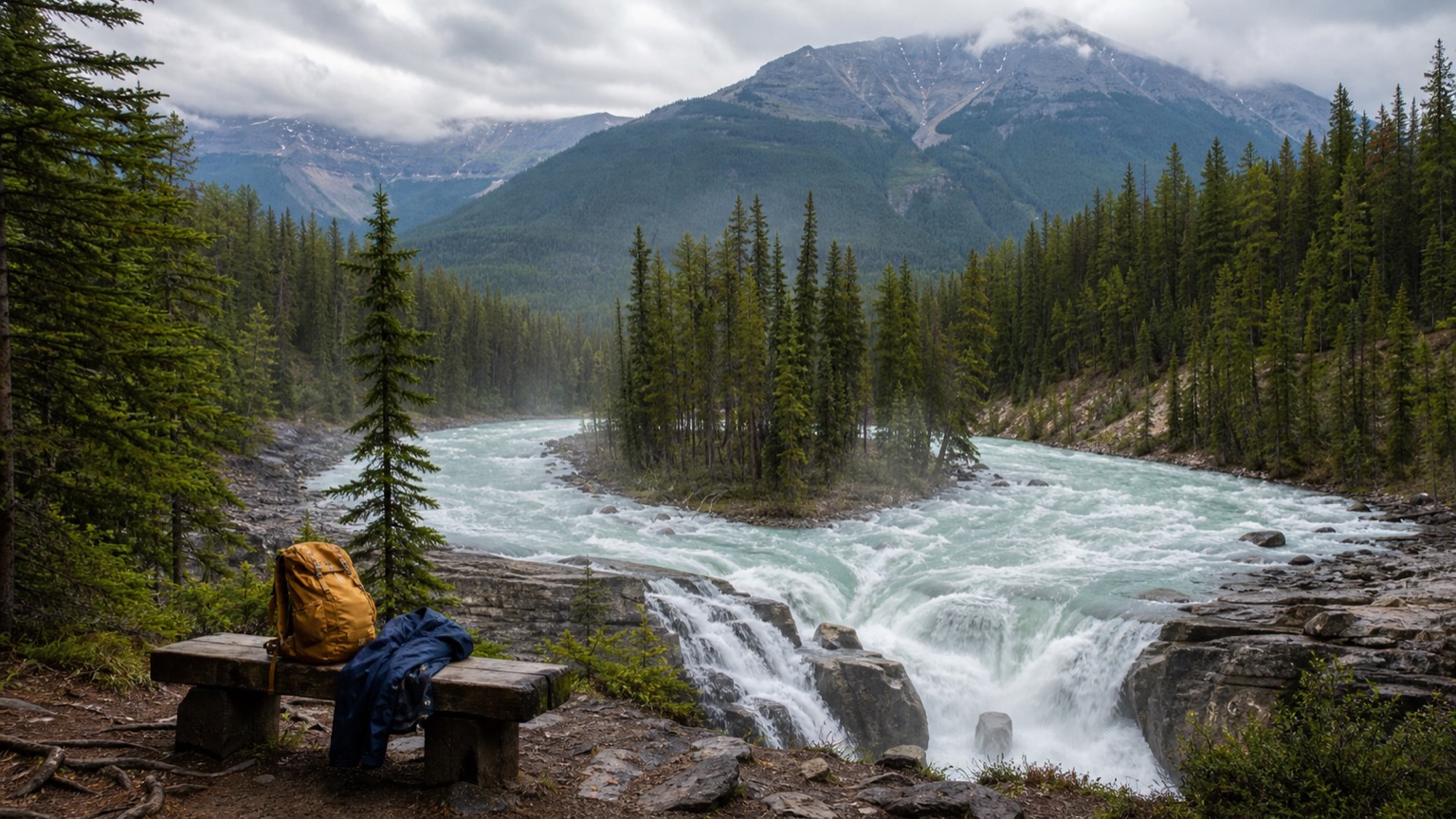
Sunwapta Falls and Athabasca Falls
The strongest Jasper-side waterfall stops. You do not need both on a rushed day, but one gives the final stretch a clear destination.
Itinerary
Suggested itinerary
1 drive day, nights at both ends
Lake Louise the night before, Jasper after the drive.
- 1Previous evening: stay in Lake Louise, buy food and fill the tank
- 2Drive day: Bow Lake, Peyto Lake, Mistaya Canyon, a glacier viewpoint and one waterfall
- 3Evening: stay in Jasper; reserve Parker Ridge for a second Parkway day
2 drive days with 1 intermediate night
Book a confirmed Parkway overnight in addition to Lake Louise and Jasper.
- 1Day 1: Bow Lake, Peyto Lake and Mistaya; stay near Saskatchewan River Crossing
- 2Day 2: Parker Ridge OR a booked glacier activity, one waterfall, then Jasper
Shorter day in uncertain weather
Travel only with an open road and suitable conditions.
- 1Check the road report before leaving; revise the trip if the road is closed
- 2Choose one lake and one glacier view; omit high-elevation hiking
- 3Reach the destination in daylight; confirm fuel availability before departure
Bases
Best base areas
Best for
Lake Louise
Early south-to-north Parkway start
Pros
- Best starting point for Bow Lake, Peyto Lake and a full drive to Jasper
- Reduces morning driving before the scenic section
- Useful if you are coming from Banff or Yoho
Watch-outs
- Limited lodging and food options
- Can be expensive in peak season
Best for
Banff Town
More restaurants and classic Banff base
Pros
- Better food and lodging range
- Works well if the Parkway follows a Banff stay
- Easier for rest-day logistics before the drive
Watch-outs
- Adds driving before the Parkway proper begins
- Makes an already long day longer
Best for
Saskatchewan River Crossing / Glacier section
Splitting the Parkway into two slower days
Pros
- Reduces pressure on a photo-heavy or hiking-heavy route
- Useful if you want Parker Ridge or Columbia Icefield time
- Helps with kids or slower travel pace
Watch-outs
- Limited services, seasonal availability and higher prices
- Not a town base with many backup options
Best for
Jasper
Northbound arrival and Jasper National Park planning
Pros
- Best endpoint with food, lodging and next-day options
- Keeps the final waterfall stops close to arrival
- Works well before Medicine Lake, Maligne Lake or open Jasper highlights
Watch-outs
- Too far for a relaxed out-and-back from Banff
- Arrival can feel late if you overstop on the Parkway
Planning notes
Avoid These Common Mistakes
Forgetting fuel and services
Fill up before the drive and do not rely on mid-route services without checking season and hours. Parks Canada notes no gasoline on the Parkway from October through May.
Treating the drive like a short transfer
The road is scenic and slow by nature. If you stop at Bow Lake, Peyto Lake, Mistaya Canyon, the Icefield and a waterfall, the day is already full.
Ignoring winter tire and road-maintenance rules
Snow tires or chains are required from November 1 to March 31 and whenever the road is snow- or ice-covered outside those dates, and winter maintenance is limited overnight. Always check 511 Alberta before driving.
Saving the biggest stops for late afternoon
Weather, fatigue and daylight can make the final third harder. Put the most important stops earlier and keep Jasper arrival realistic.
Planning too many long walks
Parker Ridge, glacier activities and waterfall walks each take time. Choose one bigger activity instead of stacking several into the same drive day.
Travel planning answers
Frequently asked questions about the Icefields Parkway
How long does the Icefields Parkway take?+
The pure drive is much shorter than the real travel day. Most visitors should plan a full day from Lake Louise to Jasper if they want several scenic stops, photos, food and a calm arrival.
What are the best stops on the Icefields Parkway?+
For a first drive, prioritize Bow Lake, Peyto Lake, Mistaya Canyon, the Columbia Icefield area and either Sunwapta Falls or Athabasca Falls near Jasper.
Can you drive the Icefields Parkway in winter?+
Yes, but it is serious mountain driving. Snow tires or chains are required from November 1 to March 31 and whenever the road is snow- or ice-covered outside those dates, services are very limited, and current road conditions should decide whether you go.
Is there gas on the Icefields Parkway?+
Do not rely on it. Fill up before the drive. Parks Canada notes no gasoline on the Parkway from October through May, and even in summer mid-route services are limited and should be checked.
Should you drive from Banff to Jasper or Jasper to Banff?+
Both directions work. South-to-north from Lake Louise to Jasper is convenient if you are continuing into Jasper National Park. The important part is starting early and not overloading the stop list.
Is the Icefields Parkway good with kids?+
Yes, if you keep the day structured. Pick one major stop every 60-90 minutes, keep food and layers ready, and do not stack too many long hikes.
Do you need two days for the Icefields Parkway?+
Not always, but two days are better if you want hikes such as Parker Ridge, more photography time, glacier activities or a slower family pace.
Worth it / Skip if
Worth it
One of the highest-value scenic drives in the Canadian Rockies, especially if you treat it as a full travel day rather than a simple transfer between Lake Louise and Jasper.
Skip if
Skip or delay the drive in poor winter conditions, low visibility, wildfire smoke or if you are not comfortable with long mountain-road stretches and limited services.
With kids
Plan one major stop every 60-90 minutes, keep snacks and layers inside the car, avoid too many long walks, and save the glacier or waterfall stops for when everyone still has energy.
Budget range
Low
120-190 CAD/day
Mid
240-420 CAD/day
Comfort
550+ CAD/day
Guide details
The road connects two different park experiences. Use Banff vs Jasper to decide whether the Parkway is a day trip, a transfer or the centre of a two-base route.
Before you drive: fuel, food and road conditions
The Icefields Parkway is not a normal highway day. It is remote, exposed and beautiful, with limited services between Lake Louise and Jasper.
Fill up before the drive. Pack food, water, layers and offline maps. Do not rely on cell service. Parks Canada specifically warns that there is no gasoline on the Parkway from October through May, and winter services are limited.
Check 511 Alberta before departure, even in good weather. In winter, snow tires or chains are mandatory from November 1 to March 31 and whenever the road is snow- or ice-covered outside those dates, and Parks Canada notes limited winter maintenance overnight. If you are not comfortable with winter mountain driving, do not force this route.
The tire rule follows section 40 of the National Parks Highway Traffic Regulations, checked September 7, 2026. The Parkway itself runs 232 km from Lake Louise to Jasper; starting in Banff town adds an approach drive.
Bow Lake and Peyto Lake
Bow Lake is the first major stop that feels like the Parkway has properly begun. It is easy to access, open, and often worth more time than a quick photo suggests.
Peyto Lake is the stronger elevated viewpoint. The color and shape are classic Canadian Rockies, and the walk from the parking area is short enough for most visitors. It can still feel busy, so go earlier if this is one of your priority stops.
If you only want two Banff-side stops, choose Bow Lake and Peyto Lake.
Waterfowl Lakes and the middle Parkway
Waterfowl Lakes are not as famous as Peyto or the Columbia Icefield, but they help the day breathe. This is a good section for a short pause, photos from the roadside or a simple reset before the canyon and glacier stops.
Do not turn every pullout into a full stop. The middle Parkway is where many itineraries lose time. Choose the places that actually add something to the day.
Mistaya Canyon and Saskatchewan River Crossing
Mistaya Canyon is one of the best short non-lake stops on the drive. The walk is not long, but the canyon gives the route a different texture: carved limestone, moving water and a closer sense of the landscape.
Saskatchewan River Crossing is more practical than scenic. Treat it as a decision point: food, washrooms or a possible break if services are operating, not something you should depend on blindly.
Columbia Icefield, Parker Ridge and the glacier section
The Columbia Icefield area is the dramatic center of the Parkway. Athabasca Glacier, the Icefield Centre, viewpoints and surrounding peaks make this section feel different from the lake-heavy first half.
If you want an easy version, stop for glacier views and keep moving. If you want a hiking version, Parker Ridge can be excellent in the right weather, but it turns the day into a more serious outdoor plan.
Give a longer hike or glacier activity a second Parkway day. Even an early start leaves limited time for additional lakes and both waterfalls.
Parks Canada lists Parker Ridge as a moderate 5.4 km return hike taking about three hours, with 250 m of elevation gain. It is a hiking block, not a quick viewpoint. At Athabasca Glacier, stay on marked paths and respect barriers; do not treat the ice as a self-guided walk. Book an appropriate guided activity if you want to go onto the glacier.
Sunwapta Falls, Athabasca Falls and arriving in Jasper
Sunwapta Falls and Athabasca Falls are the strongest Jasper-side waterfall stops. Athabasca Falls is closer to Jasper and often the easier final stop if everyone is tired.
Choose one if the day is already long. Choose both only if timing is still comfortable.
The goal is to arrive in Jasper with enough energy to eat, check in and plan the next day. A beautiful drive loses value if the final hour becomes tired driving.
One day or two days?
The daily budget bands are rough planning allowances per person for two adults sharing a room and rental car, including one night, food, a share of the car rental and fuel. International flights and booked glacier tours are extra. For the drive itself, separate hotel and rental costs you already have from additional fuel, park admission and activities. A second Parkway day adds another night and a day's meals to the whole trip.
One day is enough for the classic drive if you start early and choose stops carefully. Lake Louise to Jasper with Bow Lake, Peyto Lake, Mistaya Canyon, Columbia Icefield and one waterfall is a full, strong day.
Two days are better if you want Parker Ridge, glacier activities, slow photography, family pacing or extra weather flexibility. Splitting the route also makes the drive feel less like a transfer and more like its own destination.
Final planning rule
The Icefields Parkway is at its best when you leave room for the road itself.
Pick the stops that matter, prepare for limited services, and avoid turning every viewpoint into an obligation. The drive is the experience.
Trail figures and glacier guidance: Parks Canada hiking overview and glacier information, checked 7 September 2026. Check seasonal overnight availability directly with The Crossing Resort.
Sources & Last updated
Last updated: 2026-09-07
Sources
- Parks Canada: Official Icefields Parkway safety, road-maintenance, winter driving and visitor information
- Jasper National Park / Parks Canada: Seasonal road restrictions, winter maintenance and Jasper-side access updates
- Alberta 511: Current road, construction, closure and weather-condition checks
- Banff & Lake Louise Tourism: Local stop information for Bow Lake, Peyto Lake, Mistaya Canyon and Banff-side planning
- Parks Canada – day hiking: Checked 7 September 2026; trail figures, glacier safety or location and seasonal accommodation.
- Parks Canada – glacier travel: Checked 7 September 2026; trail figures, glacier safety or location and seasonal accommodation.
- The Crossing Resort: Checked 7 September 2026; trail figures, glacier safety or location and seasonal accommodation.
For your trip planning
Travel Services
Useful services for your trip. Choose what fits your plans.
Affiliate offers: We may earn a commission if you book. External search forms load only when opened, sharing data with Travelpayouts and the provider.
Nearby / next stop
MS · ITIN
Last updated 2026-06-15
Jasper National Park Highlights: A Calm 2-3 Day Plan
A practical Jasper National Park guide for 2-3 days: Icefields Parkway arrival, Medicine Lake and Maligne Lake, Pyramid Lake, easy family stops, recovery-aware closures and road-condition checks.
Read guide →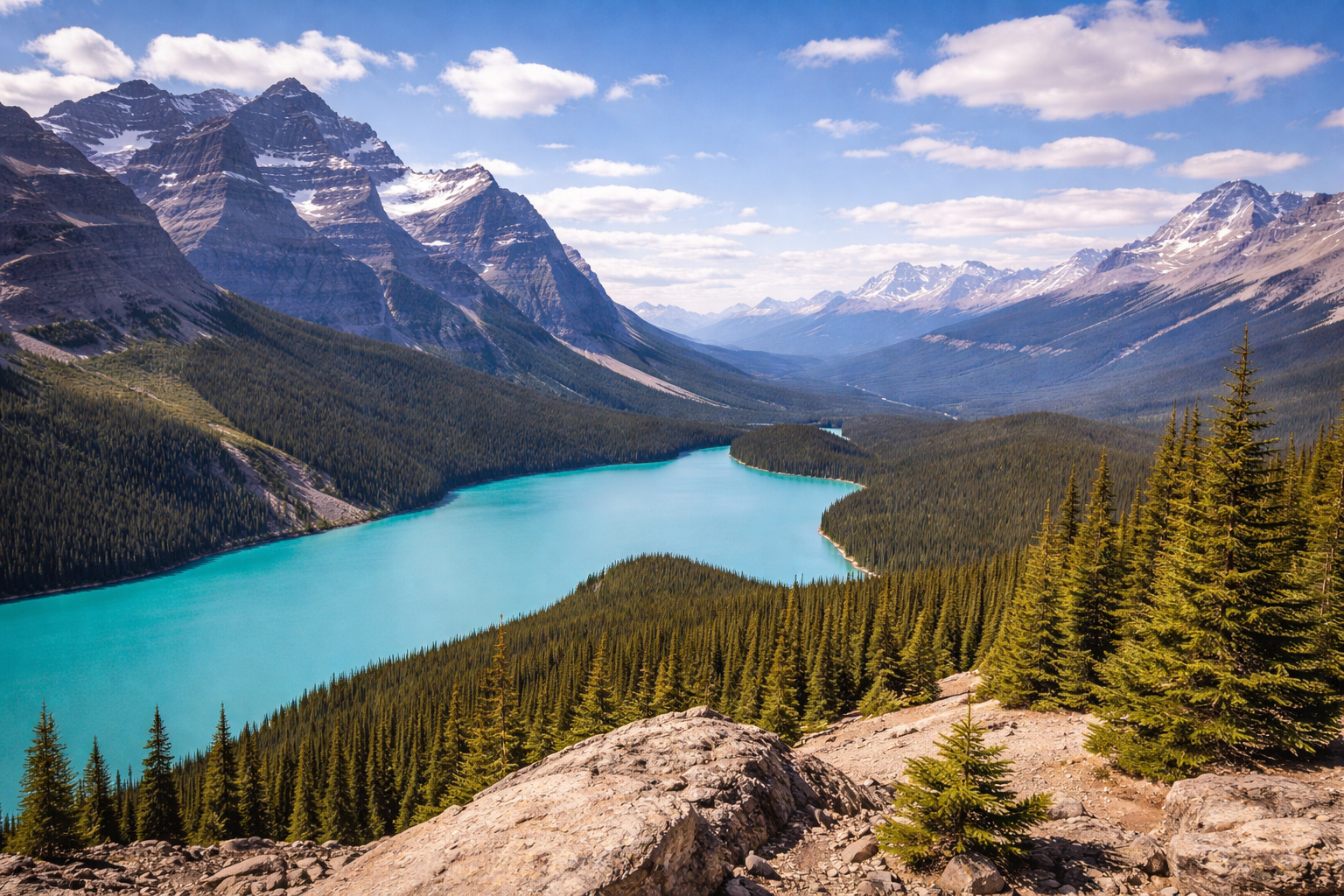
TTD · MS
Last updated 2026-08-31
Peyto Lake: Hike Time, Best Time & Viewpoint
The Peyto Lake Viewpoint walk is 0.6 km each way and about 30 minutes round trip. Plan 45-60 minutes; compare the main lookout, Bow Summit hike and best time.
Read guide →